Nous utilisons des cookies pour améliorer votre expérience. Pour nous conformer à la nouvelle directive sur la vie privée, nous devons demander votre consentement à l’utilisation de ces cookies. En savoir plus.

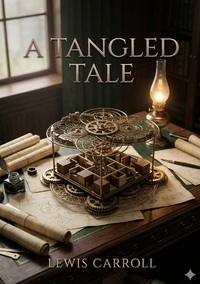
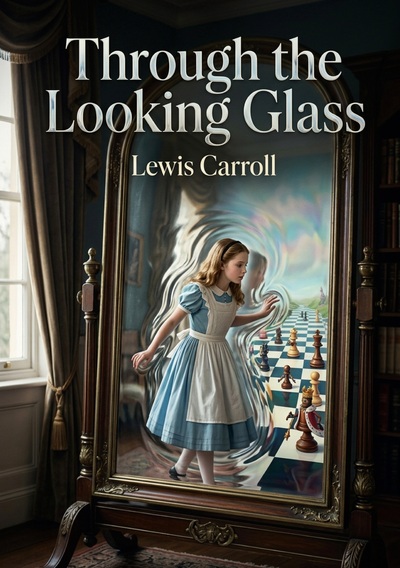
Through the Looking Glass
EAN : 9791043122507
Édition papier
EAN : 9791043122507
Paru le : 23 juin 2026
16,00 €
15,17 €
Disponible
Pour connaître votre prix et commander, identifiez-vous
Notre engagement qualité
-
 Livraison gratuite
en France sans minimum
de commande -
 Manquants maintenus
en commande
automatiquement -
 Un interlocuteur
unique pour toutes
vos commandes -
 Toutes les licences
numériques du marché
au tarif éditeur -
 Assistance téléphonique
personalisée sur le
numérique -
 Service client
Du Lundi au vendredi
de 9h à 18h
- EAN13 : 9791043122507
- Réf. fournisseur : 457284
- Collection : OPEN CULTURE
- Date Parution : 23 juin 2026
- Disponibilite : Disponible
- Barème de remise : NS
- Nombre de pages : 142
- Format : H:210 mm L:148 mm E:8 mm
- Poids : 194gr
- Résumé : Through the Looking-Glass is a novel by Charles Lutwidge Dodgson, published under the pseudonym Lewis Carroll in 1871. It is the sequel to Alice's Adventures in Wonderland. Alice enters a fantastical world by climbing through a mirror, finding that everything is reversed. Structure and Plot The novel consists of twelve chapters. The world is laid out as a giant chess board. Alice participates in a game of chess, starting as a White Pawn, aiming to reach the eighth rank to become a Queen. The chapters follow her progression across the board, intersecting with characters and resolving different chess moves. Characters The Red Queen and the White Queen guide Alice. Tweedledum and Tweedledee recite "The Walrus and the Carpenter". Humpty Dumpty explains the portmanteau words in the nonsense poem "Jabberwocky" and discusses semantics. The White Knight repeatedly falls off his horse. The Lion and the Unicorn fight for the crown. Thematic Elements Determinism is a central theme, as moves are dictated by the rules of chess. Inversion and reflection are constant motifs. Time runs backward; the White Queen remembers the future. Spatial movement is reversed: Alice must walk away from a location to reach it. Language and linguistics are heavily explored, particularly in the dialogue with Humpty Dumpty, reflecting Carroll's interest in logic. Historical Context and Genre Featuring fifty illustrations by John Tenniel, the book solidified Carroll's position in Victorian literature. Categorized within children's literature, fantasy, and literary nonsense, the surface narrative appeals to children, while the mathematical puzzles and logical paradoxes provide complexity targeted at adults.