Nous utilisons des cookies pour améliorer votre expérience. Pour nous conformer à la nouvelle directive sur la vie privée, nous devons demander votre consentement à l’utilisation de ces cookies. En savoir plus.

Metamorphoses
EAN : 9791043142178
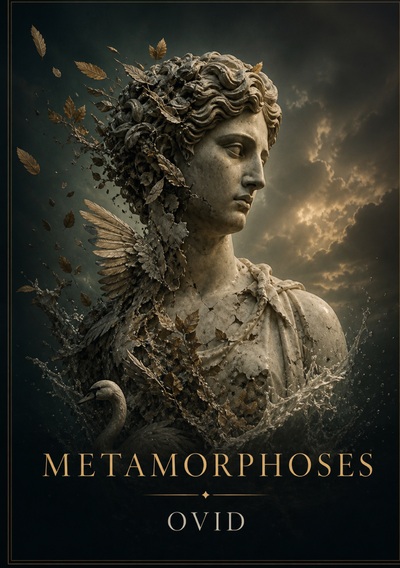
Édition papier
EAN : 9791043142178
Paru le : 19 mars 2026
29,95 €
28,39 €
Disponible
Pour connaître votre prix et commander, identifiez-vous
Notre engagement qualité
-
 Livraison gratuite
en France sans minimum
de commande -
 Manquants maintenus
en commande
automatiquement -
 Un interlocuteur
unique pour toutes
vos commandes -
 Toutes les licences
numériques du marché
au tarif éditeur -
 Assistance téléphonique
personalisée sur le
numérique -
 Service client
Du Lundi au vendredi
de 9h à 18h
- EAN13 : 9791043142178
- Réf. fournisseur : 449706
- Date Parution : 19 mars 2026
- Disponibilite : Disponible
- Barème de remise : NS
- Nombre de pages : 584
- Format : H:210 mm L:148 mm E:31 mm
- Poids : 745gr
- Résumé : Ovid's Metamorphoses stands as one of the most influential works in Western literature, a monumental epic poem that has shaped the artistic and literary landscape for over two millennia. Completed in 8 AD, this extensive narrative comprises fifteen books and approximately 250 myths, woven together through the central theme of transformation—metamorphosis. Unlike the singular focus of Virgil's Aeneid, Ovid's masterpiece is a "collective poem" that spans the entire history of the universe, from the initial transition of Chaos into Cosmos to the political and divine elevation of the Roman Empire in Ovid's own time. The poem begins with the physical ordering of the universe and the creation of humanity, leading into the ages of man (Gold, Silver, Bronze, and Iron) and the Great Flood. From there, Ovid meticulously documents the interactions between gods and mortals, where divine whim, passion, and vengeance frequently result in the physical alteration of human beings into animals, plants, stones, or celestial bodies. Key narrative cycles include the tragic stories of Apollo and Daphne, the hubris of Phaethon, the fatal vanity of Narcissus, and the ingenious escape of Daedalus and Icarus. The text also provides the definitive accounts of the weaver Arachne, the sculptor Pygmalion, and the devoted couple Baucis and Philemon. The later books of the Metamorphoses transition from purely mythological tales to "heroic" and "historical" narratives, including the fall of Troy, the wanderings of Aeneas, and the early legends of Rome. The work culminates in the philosophical teachings of Pythagoras on the permanence of change and the transmigration of souls, providing a conceptual framework for the preceding myths. The epic concludes with the transformation of Julius Caesar into a star, linking the ancient mythological past directly to the contemporary Roman state. This edition offers a faithful translation of Ovid's fluid and witty Latin verse, preserving the speed, descriptive richness, and narrative complexity of the original. As a primary source for Greek and Roman mythology, the Metamorphoses remains an essential text for scholars of classics, literature, and art history. Its stories have inspired countless masterpieces by artists such as Titian, Bernini, and Dante, making it a foundational pillar of the Western canon. This comprehensive volume is an indispensable resource for readers seeking to explore the origins of classical myth and the enduring power of narrative transformation.
- Biographie : Publius Ovidius Naso (Latin: [ˈpuːbliʊs ɔˈwɪdiʊs ˈnaːsoː]; 20 March 43 BC - AD 17/18), known in English as Ovid (/ˈɒvɪd/ OV-id),[4][5] was a Roman poet who lived during the reign of Augustus. He was a younger contemporary of Virgil and Horace, with whom he is often ranked as one of the three canonical poets of Latin literature. The Imperial scholar Quintilian considered him the last of the Latin love elegists.[6] Although Ovid enjoyed enormous popularity during his lifetime, the emperor Augustus exiled him to Tomis, the capital of the newly organised province of Moesia, on the Black Sea, where he remained for the last nine or ten years of his life. Ovid himself attributed his banishment to a carmen et error ("poem and a mistake"), but his reluctance to disclose specifics has resulted in much speculation among scholars. Ovid is most famous for the Metamorphoses, a continuous mythological narrative in fifteen books written in dactylic hexameters. He is also known for works in elegiac couplets such as Ars Amatoria ("The Art of Love") and Fasti. His poetry was much imitated during Late Antiquity and the Middle Ages, and greatly influenced Western art and literature. The Metamorphoses remains one of the most important sources of classical mythology today.[7]