Nous utilisons des cookies pour améliorer votre expérience. Pour nous conformer à la nouvelle directive sur la vie privée, nous devons demander votre consentement à l’utilisation de ces cookies. En savoir plus.

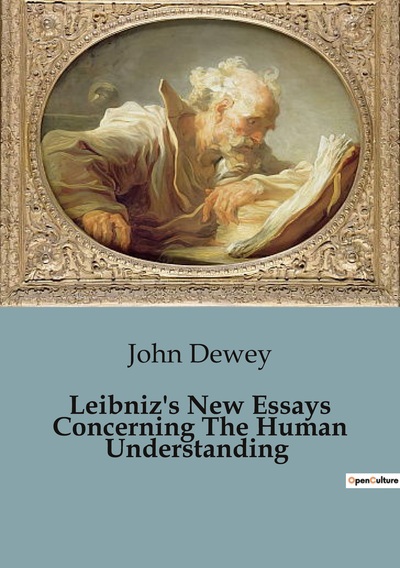
Leibniz's New Essays Concerning The Human Understanding
EAN : 9791041822683
Édition papier
EAN : 9791041822683
Paru le : 25 oct. 2023
17,00 €
16,11 €
Disponible
Pour connaître votre prix et commander, identifiez-vous
Notre engagement qualité
-
 Livraison gratuite
en France sans minimum
de commande -
 Manquants maintenus
en commande
automatiquement -
 Un interlocuteur
unique pour toutes
vos commandes -
 Toutes les licences
numériques du marché
au tarif éditeur -
 Assistance téléphonique
personalisée sur le
numérique -
 Service client
Du Lundi au vendredi
de 9h à 18h
- EAN13 : 9791041822683
- Réf. fournisseur : 314526
- Date Parution : 25 oct. 2023
- Disponibilite : Disponible
- Barème de remise : NS
- Nombre de pages : 176
- Format : H:210 mm L:148 mm E:10 mm
- Poids : 236gr
- Résumé : Leibniz's "New Essays Concerning the Human Understanding" is a profound exploration of the philosophical landscape of the 17th century, reflecting the intellectual ferment of the era. The text delves into Leibniz's engagement with the ideas of his predecessors and contemporaries, particularly focusing on his response to John Locke's empiricism. Leibniz critiques Locke's denial of innate ideas, proposing instead that the mind possesses inherent principles that shape our understanding of the world. This work is not merely a critique but an attempt to synthesize the rationalist and empiricist traditions, aiming to reconcile the mechanical philosophy of Descartes with the organic and teleological views of Aristotle. Leibniz's philosophy is characterized by its emphasis on the unity and interdependence of all things, a reflection of the scientific advancements of his time. His concept of pre-established harmony, which posits that the universe is a coherent and interconnected whole, is central to his thought. The text also highlights Leibniz's belief in the rationality and intelligibility of the world, suggesting that every part of the universe reflects the whole. This optimistic view of the universe as a rational and harmonious system is a testament to Leibniz's belief in the power of reason and the potential for human understanding to grasp the complexities of the world. Through his critical exposition, Leibniz not only addresses the limitations of his predecessors but also lays the groundwork for future philosophical inquiry, influencing thinkers such as Kant and shaping the trajectory of modern philosophy.
- Biographie : John Dewey (1859.1952) was an influential American philosopher and educator, central to the development of pragmatist philosophy and progressive education. After graduating from Johns Hopkins University, he taught at the University of Chicago and Columbia University, developing ideas that bridged philosophy, psychology, and social reform. His works, including « Human Nature and Conduct » (1922) and « Democracy and Education » (1916), revolutionized pedagogy by advocating for experiential learning and intelligence as tools for democratic empowerment. Dewey promoted an ethics grounded in empirical facts and envisioned a society where collective habit and critical intelligence work together to solve social problems. Recognized as the father of modern education, his legacy continues to influence pragmatist philosophy, social sciences, and movements for social justice.