Nous utilisons des cookies pour améliorer votre expérience. Pour nous conformer à la nouvelle directive sur la vie privée, nous devons demander votre consentement à l’utilisation de ces cookies. En savoir plus.

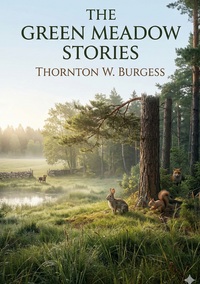
Green Forest Stories
EAN : 9791043141256
Édition papier
EAN : 9791043141256
Paru le : 13 mars 2026
26,95 €
25,55 €
Disponible
Pour connaître votre prix et commander, identifiez-vous
Notre engagement qualité
-
 Livraison gratuite
en France sans minimum
de commande -
 Manquants maintenus
en commande
automatiquement -
 Un interlocuteur
unique pour toutes
vos commandes -
 Toutes les licences
numériques du marché
au tarif éditeur -
 Assistance téléphonique
personalisée sur le
numérique -
 Service client
Du Lundi au vendredi
de 9h à 18h
- EAN13 : 9791043141256
- Réf. fournisseur : 445980
- Date Parution : 13 mars 2026
- Disponibilite : Disponible
- Barème de remise : NS
- Nombre de pages : 370
- Format : H:210 mm L:148 mm E:20 mm
- Poids : 478gr
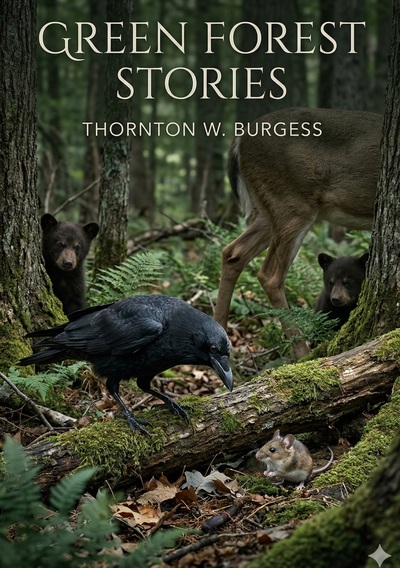
- Résumé : American naturalist and conservationist Thornton W. Burgess was the author of more than one hundred books for children; the best-remembered of these is Old Mother West Wind, which was originally written for his young son. Burgess also wrote dozens of books about the creatures of the northern North American forest, four of which are collected here as the Green Forest Stories.This Green Forest Stories compilation focuses on Lightfoot the Deer, Blacky the Crow, Whitefoot the Wood Mouse, and twin bear cubs Woof-Woof and Boxer. Readers may have encountered these characters in other of Burgess's stories about the "little people" of the Massachusetts forest. Burgess's earliest ventures into animal fantasy are roughly contemporary with Rudyard Kipling's Just So Stories and Beatrix Potter's tales of various animals, and represent the most lasting American entry into this genre.Animal fantasy is a sub-genre of children's literature in which animals are anthropomorphized into human-like characters and use language like humans. It is often criticized by those who want readers to experience more realistic representations of animals and the natural world, but animal fantasies engage a millennia-old tradition, in the Western canon reaching back at least as far as Aesop's Fables; animal characters feature in teaching stories for children (and adults) in cultures around the world. Burgess's stories are intended for children in the early elementary grades. The challenges and triumphs of the "little people" in his stories will feel identifiable to many young readers, and the snippets of moralizing and authorial commentary interleaved with the actions of the plot reflect a teaching device with a long history.
- Biographie : Born January 17, 1874 in Sandwich, Massachusetts, on Cape Cod, Burgess was the son of Caroline F. Haywood and Thornton W. Burgess Sr., a direct descendant of Thomas Burgess, one of the first Sandwich settlers in 1637. Thornton, Sr., died the same year his son was born, and the young Thornton, Jr. was brought up by his mother in Sandwich. They lived in humble circumstances. As a youth, he worked tending cows, picking trailing arbutus (mayflowers) or berries, shipping water lilies from local ponds, selling candy, and trapping muskrats. William C. Chipman, one of his employers, lived on Discovery Hill Road, a wildlife habitat of woodland and wetland. This habitat became the setting of many stories in which Burgess refers to Smiling Pool and the Old Briar Patch.