Nous utilisons des cookies pour améliorer votre expérience. Pour nous conformer à la nouvelle directive sur la vie privée, nous devons demander votre consentement à l’utilisation de ces cookies. En savoir plus.

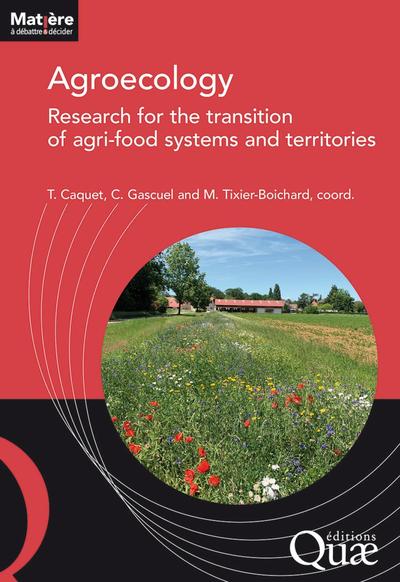
Agroecology : research for the transition of agri-food systems and territories
Quae - EAN : 9782759232932
Édition papier
EAN : 9782759232932
Paru le : 22 déc. 2020
25,00 €
23,70 €
Disponible
Pour connaître votre prix et commander, identifiez-vous
Notre engagement qualité
-
 Livraison gratuite
en France sans minimum
de commande -
 Manquants maintenus
en commande
automatiquement -
 Un interlocuteur
unique pour toutes
vos commandes -
 Toutes les licences
numériques du marché
au tarif éditeur -
 Assistance téléphonique
personalisée sur le
numérique -
 Service client
Du Lundi au vendredi
de 9h à 18h
- EAN13 : 9782759232932
- Réf. fournisseur : 146883
- Collection : MATIERE A DEBAT
- Editeur : Quae
- Date Parution : 22 déc. 2020
- Disponibilite : Disponible
- Barème de remise : NS
- Nombre de pages : 94
- Format : H:210 mm L:145 mm E:7 mm
- Poids : 186gr
- Interdit de retour : Retour interdit
- Résumé : Agroecology was chosen by INRAE as one of its interdisciplinary scientific foresight studies designed to identify research fronts in response to major societal challenges. Eighty researchers drew up an assessment and proposed research avenues for agroecology. This book summarizes their main conclusions. Agroecology, as a scientific discipline that puts ecology back at the centre of agricultural system design, is now well established. Diversification of living organisms in agroecosystems is a broad objective that is intended to make these systems more robust and resilient. Research in genetics and landscape ecology must be mobilized so that agroecology can use mechanisms from the field to landscape scales. Progress is being made in modelling agroecological systems to better understand the many biotic and abiotic interactions, to predict them, and to begin to manage some of them. Diversification of living organisms in agricultural production (species, varieties, crop rotations, etc.) leads to more varied products. The consequences will be significant on the commodity chains, and more precisely on agri-food systems, from production methods to product consumption. These changes are long-term. The agroecological transition, which is adaptive, co-constructed with all actors, is in itself a research subject, and will rely on experimental devices, farms, and ‘Territories of innovation'.
- Biographie : Michèle Tixier-Boichard est directrice de recherche à INRAE. Ses travaux en génétique avicole, commencés au laboratoire de Génétique factorielle, ont très tôt intégré les approches moléculaires. Elle préside le conseil de la Cryobanque nationale et a mis en place un réseau de centres de ressources biologiques sur les animaux domestiques, qui concerne notamment les races de poules.