Nous utilisons des cookies pour améliorer votre expérience. Pour nous conformer à la nouvelle directive sur la vie privée, nous devons demander votre consentement à l’utilisation de ces cookies. En savoir plus.

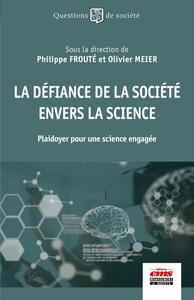
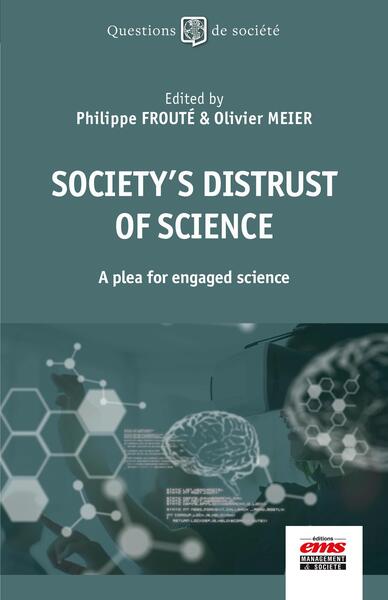
Society's distrust of Science
Ems Geodif - EAN : 9782386304385
Édition papier
EAN : 9782386304385
Paru le : 31 déc. 2099
25,00 €
23,70 €
Bientôt disponible
Pour connaître votre prix et commander, identifiez-vous
A paraître 31 déc. 2099
Notre engagement qualité
-
 Livraison gratuite
en France sans minimum
de commande -
 Manquants maintenus
en commande
automatiquement -
 Un interlocuteur
unique pour toutes
vos commandes -
 Toutes les licences
numériques du marché
au tarif éditeur -
 Assistance téléphonique
personalisée sur le
numérique -
 Service client
Du Lundi au vendredi
de 9h à 18h
- EAN13 : 9782386304385
- Réf. fournisseur : 454595
- Collection : QUESTIONS DE SO
- Editeur : Ems Geodif
- Date Parution : 31 déc. 2099
- Disponibilite : Pas encore paru
- Barème de remise : NS
- Format : H:239 mm L:154 mm E:12 mm
- Poids : 299gr
-
Résumé :
The questioning of scientific knowledge is now a global phenomenon. Going far beyond a mere misunderstanding of scientific facts, this mistrust is causing lasting damage to the relationship between researchers, institutions and citizens, in a context characterised by disinformation, the polarisation of public debate and the challenge to traditional forms of expertise.
Even as science remains a vital tool for addressing major contemporary challenges, the relationship between science and society appears to be fraught with conflicting expectations, blending trust and suspicion. How can we restore a sustainable dialogue between the academic world and society? How can we rethink the conditions under which knowledge is produced, disseminated and shared?
Drawing on reflections carried out as part of the ‘Science With and For Society’ (Science Avec et Pour la Société, SAPS) initiative at the University of Paris-Est Créteil, this collective work brings together researchers and practitioners from a variety of disciplines. Through analyses and accounts of practical experience, the authors explore contemporary shifts in the relationship between science and society and advocate for a more open, transparent and participatory science, conceived as a genuine common good serving collective decision-making.
- Biographie : Philippe Frouté est titulaire d’un doctorat en économie de l’Université Paris 1 Panthéon-Sorbonne. Il est actuellement doyen de l’AEI International School à l’Université Paris-Est Créteil Val-de-Marne, en France, où il a lancé plusieurs programmes innovants, notamment en International Business, et chercheur au Lipha. Ses recherches portent sur l’analyse économique du droit ainsi que sur les finances publiques. Il a publié de nombreux articles dans des revues académiques telles que l’European Journal of Law and Economics, Applied Financial Economics, Revue Économique, Revue d’Économie Politique et le Journal International de Bioéthique et d’Éthique des Sciences. De plus, il est co-rédacteur en chef de la revue International Transitions.