Nous utilisons des cookies pour améliorer votre expérience. Pour nous conformer à la nouvelle directive sur la vie privée, nous devons demander votre consentement à l’utilisation de ces cookies. En savoir plus.

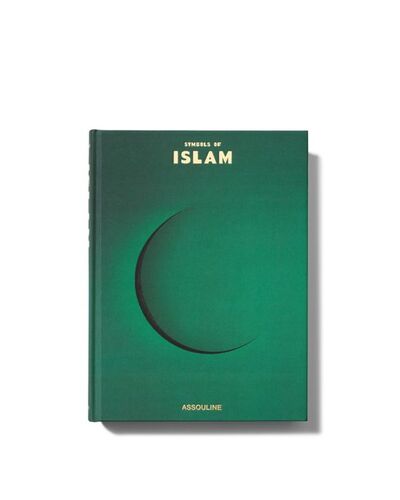
Symbols of Islam
Assouline - EAN : 9781649807083
Édition papier
EAN : 9781649807083
Paru le : 3 sept. 2026
120,00 €
113,74 €
Disponible
Pour connaître votre prix et commander, identifiez-vous
Notre engagement qualité
-
 Livraison gratuite
en France sans minimum
de commande -
 Manquants maintenus
en commande
automatiquement -
 Un interlocuteur
unique pour toutes
vos commandes -
 Toutes les licences
numériques du marché
au tarif éditeur -
 Assistance téléphonique
personalisée sur le
numérique -
 Service client
Du Lundi au vendredi
de 9h à 18h
- EAN13 : 9781649807083
- Collection : CLASSICS
- Editeur : Assouline
- Date Parution : 3 sept. 2026
- Disponibilite : Disponible
- Barème de remise : NS
- Nombre de pages : 197
- Format : H:330 mm L:250 mm E:40 mm
- Poids : 2.5kg
- Interdit de retour : Retour interdit
-
Résumé :
Symbols of Islam highlights abstract spiritual representation in the core symbols of Islam, which relies less on material objects for ritual use. As part of Assouline’s Symbols of Religion Series, The richly illustrated volume serves as a practical and sensory guide; a foundational manual that every cultivated reader is inclined to feel.
Written by prominent Algerian philosopher and anthropologist Malek Chebel, with atmospheric photography by Laziz Hamani, the title reveals how community life is more characteristic of Islam, which upholds universal participation in acts of congregation. Whether linked to Islam’s Five Pillars (such as profession of faith or fasting), or its architecture (like the mosque or Kaaba), Symbols of Islam reveals a wealth of meaning and cultural significance, restoring the rhythm of contemplation and the unfolding of the spiritual understanding. -
Biographie :
Malek Chebel (1953–2016), born in Skikda, Algeria, was an anthropologist by profession but also worked as a radio journalist. A leading expert on Arab culture and the history and practice of Islam, he was the author of over a dozen works, including Dictionary of Muslim Symbols: Rites, Mysticism, and Civilization (Albin Michel, Paris, 1995).
Mikaïl Chebel studied Humanities and Political Sciences at Paris X University and the École des Hautes Études en Sciences Sociales (EHESS). His research explores the intersections of art, politics, and the Muslim world. After serving as Head of Communication for the Foundation of Islam of France, he entered a new career as an art critic and exhibition curator, collaborating with major institutions such as the Centre Pompidou, the Palais de Tokyo, and the Arab World Institute, with a focus on digital art. As the son of Malek Chebel, he spearheaded the creation of the Malek Chebel Foundation alongside other partners. Based in France and Algeria, the organization is dedicated to promoting his father’s work and fostering the values of spirituality and modernity.