Nous utilisons des cookies pour améliorer votre expérience. Pour nous conformer à la nouvelle directive sur la vie privée, nous devons demander votre consentement à l’utilisation de ces cookies. En savoir plus.

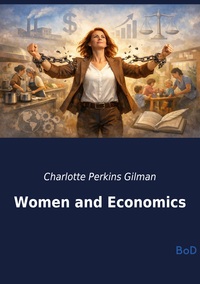
Women and Economics
EAN : 9791043146589
Édition papier
EAN : 9791043146589
Paru le : 10 avr. 2026
24,95 €
23,65 €
Disponible
Pour connaître votre prix et commander, identifiez-vous
Notre engagement qualité
-
 Livraison gratuite
en France sans minimum
de commande -
 Manquants maintenus
en commande
automatiquement -
 Un interlocuteur
unique pour toutes
vos commandes -
 Toutes les licences
numériques du marché
au tarif éditeur -
 Assistance téléphonique
personalisée sur le
numérique -
 Service client
Du Lundi au vendredi
de 9h à 18h
- EAN13 : 9791043146589
- Réf. fournisseur : 448389
- Date Parution : 10 avr. 2026
- Disponibilite : Disponible
- Barème de remise : NS
- Nombre de pages : 258
- Format : H:210 mm L:148 mm E:14 mm
- Poids : 339gr
- Résumé : Charlotte Perkins Gilman, most famous for her short story "The Yellow Wallpaper," wrote Women and Economics in 1898, at a time when the roles of women in society were already undergoing radical change: women were entering the work force in large numbers, the suffrage movement was agitating for the vote, and young women were looking for a new definition of their place other than as a wife or mother.The book takes the position that humans are the only species in which the female depends on the male for her survival, and that this arrangement must change for the human race to continue to be successful. Gilman argues for the evolution of marriage, family, home life, and what she calls the sexuo-economic relationship between men and women. Although she was in demand as a lecturer and writer, Women and Economics was the first book-length work to consolidate her views. As a feminist text, it's significant not necessarily for its profundity or for its appeal for women's rights, but rather for its application of social Darwinism, espousing the theory that the roles played by women inevitably evolve and that the gendered division of labor produces warped human beings of both sexes. Its popularity was also helped by its accessibility—as one of her critics stated, "it stirs no deep reverberations of the soul ... but you can quote it, and remember its points." As suffragism progressed and first wave feminism began to fade, Gilman's ideas were somewhat forgotten. But as feminism resurged in the 1960s, her work was rediscovered and interest rebounded in this groundbreaking feminist who played an important role in shaping public opinion, disseminating radical ideas, and encouraging women (and men) to change their thinking about gender roles.