Nous utilisons des cookies pour améliorer votre expérience. Pour nous conformer à la nouvelle directive sur la vie privée, nous devons demander votre consentement à l’utilisation de ces cookies. En savoir plus.

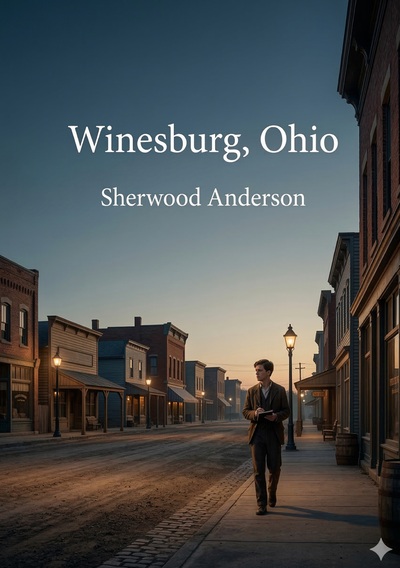
Winesburg, Ohio
EAN : 9791043146565
Édition papier
EAN : 9791043146565
Paru le : 9 avr. 2026
24,95 €
23,65 €
Disponible
Pour connaître votre prix et commander, identifiez-vous
Notre engagement qualité
-
 Livraison gratuite
en France sans minimum
de commande -
 Manquants maintenus
en commande
automatiquement -
 Un interlocuteur
unique pour toutes
vos commandes -
 Toutes les licences
numériques du marché
au tarif éditeur -
 Assistance téléphonique
personalisée sur le
numérique -
 Service client
Du Lundi au vendredi
de 9h à 18h
- EAN13 : 9791043146565
- Réf. fournisseur : 448571
- Date Parution : 9 avr. 2026
- Disponibilite : Disponible
- Barème de remise : NS
- Nombre de pages : 250
- Format : H:210 mm L:148 mm E:14 mm
- Poids : 329gr
- Résumé : Winesburg, Ohio, is set in a fictional town in early 1900s America based on Anderson's boyhood memories of his hometown of Clyde, Ohio. The novel is actually a series of interconnected short stories, with each one focusing on the life of a different resident of the sleepy, pre-industrial town. Though each story peers into the personal life of a different character, the common threads running through all of them are George Willard, the young reporter for the Winesburg Eagle—and a pervasive sense of loneliness, even despair. As the stories obliquely trace George's coming of age, he becomes a symbol of the hope the town holds for the future as its citizens struggle against the oppressive smallness of their existence and their paradoxical inability to form meaningful bonds with each other in such a small community.The stories in Winesburg, Ohio are of a decidedly melancholy nature, but their real beauty lies in the vivid characterization of the big personalities living in the small town. The simplicity of Anderson's plain-styled prose paints a rich picture, with each character precisely portrayed in all of their dusty down-to-earth physicality. One can almost picture the narrator as the whiskey-soaked voice of Tom Waits, rolling each syllable around in his mouth as the summer heat lies heavy in the twilight air.Atmosphere aside, the stories are also unique in that Anderson creates narrative tension not with plot development, but with insights into the psychology of the kinds of people who choose, or don't choose, to live in Winesburg. This makes the novel one of the earliest examples of literary modernism. It was praised by its contemporaries on publication, with H. L. Mencken stating that the novel "embodies some of the most remarkable writing done in America in our time." It remained both acclaimed and widely read throughout the 1930s, when its popularity waned with the author's own. In the 1960s critics reevaluated it, firmly placing it in the canon of modern American classics.
- Biographie : Sherwood Anderson (September 13, 1876 - March 8, 1941) was an American novelist and short story writer, known for subjective and self-revealing works. Self-educated, he rose to become a successful copywriter and business owner in Cleveland and Elyria, Ohio. In 1912, Anderson had a nervous breakdown that led him to abandon his business and family to become a writer.