Nous utilisons des cookies pour améliorer votre expérience. Pour nous conformer à la nouvelle directive sur la vie privée, nous devons demander votre consentement à l’utilisation de ces cookies. En savoir plus.

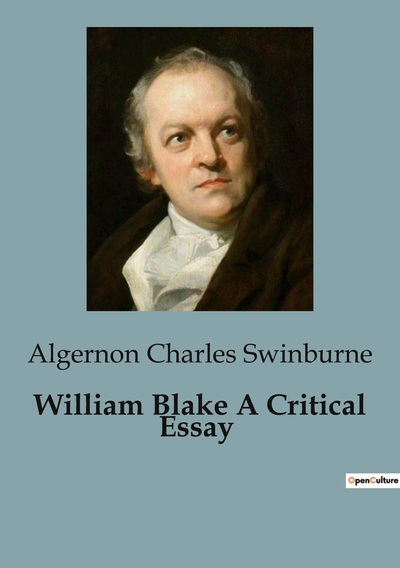
William Blake A Critical Essay
EAN : 9791041825196
Édition papier
EAN : 9791041825196
Paru le : 10 nov. 2023
19,00 €
18,01 €
Disponible
Pour connaître votre prix et commander, identifiez-vous
Notre engagement qualité
-
 Livraison gratuite
en France sans minimum
de commande -
 Manquants maintenus
en commande
automatiquement -
 Un interlocuteur
unique pour toutes
vos commandes -
 Toutes les licences
numériques du marché
au tarif éditeur -
 Assistance téléphonique
personalisée sur le
numérique -
 Service client
Du Lundi au vendredi
de 9h à 18h
- EAN13 : 9791041825196
- Réf. fournisseur : 319381
- Date Parution : 10 nov. 2023
- Disponibilite : Disponible
- Barème de remise : NS
- Nombre de pages : 172
- Format : H:210 mm L:148 mm E:10 mm
- Poids : 230gr
- Résumé : Texte à corriger : "William Blake: A Critical Essay" by Algernon Charles Swinburne delves into the life and works of the visionary poet and artist William Blake. Swinburne highlights Blake's intermediate position as a precursor to the Romantic movement, emphasizing his profound originality and the challenges he faced in gaining recognition during his lifetime. The essay discusses Blake's early life, including his apprenticeship as an engraver and his development as a poet, marked by the publication of "Poetical Sketches." Swinburne praises Blake's lyrical prowess, comparing his work to that of Elizabethan poets, and notes the influence of Blake's mystical changes on his art and poetry. The essay also examines Blake's philosophical and religious beliefs, which often contradicted the norms of his time, leading to his marginalization. Swinburne provides an analysis of Blake's symbolic and prophetic works, such as "The Gates of Paradise," highlighting their complex allegories and spiritual themes. The essay underscores Blake's defiance of conventional artistic and literary standards, portraying him as a misunderstood genius whose work was ahead of its time. Swinburne's critical essay serves as both a tribute to Blake's enduring legacy and a call for a deeper appreciation of his contributions to art and literature.
