Nous utilisons des cookies pour améliorer votre expérience. Pour nous conformer à la nouvelle directive sur la vie privée, nous devons demander votre consentement à l’utilisation de ces cookies. En savoir plus.

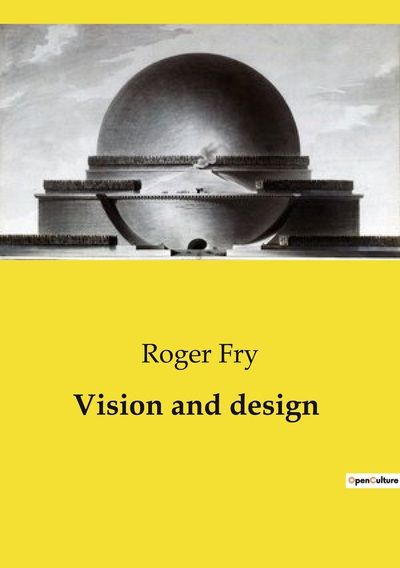
Vision and design
EAN : 9791043103513
Édition papier
EAN : 9791043103513
Paru le : 26 juin 2024
27,00 €
25,59 €
Disponible
Pour connaître votre prix et commander, identifiez-vous
Notre engagement qualité
-
 Livraison gratuite
en France sans minimum
de commande -
 Manquants maintenus
en commande
automatiquement -
 Un interlocuteur
unique pour toutes
vos commandes -
 Toutes les licences
numériques du marché
au tarif éditeur -
 Assistance téléphonique
personalisée sur le
numérique -
 Service client
Du Lundi au vendredi
de 9h à 18h
- EAN13 : 9791043103513
- Réf. fournisseur : 414211
- Collection : OPEN CULTURE
- Date Parution : 26 juin 2024
- Disponibilite : Disponible
- Barème de remise : NS
- Nombre de pages : 414
- Format : H:210 mm L:148 mm E:22 mm
- Poids : 533gr
- Résumé : In "Change and Design," Roger Fry delves into the intricate relationship between art and life, challenging the conventional notion that art merely imitates reality. Fry argues that art is not just a reflection of the physical world but a manifestation of the imaginative life, which exists parallel to our actual experiences. He suggests that art allows individuals to engage with emotions and perceptions in a way that is unencumbered by the practical demands of real life. This imaginative shift, Fry posits, is what distinguishes art from mere imitation. He explores how different historical periods have seen varying degrees of alignment between art and the broader cultural and intellectual currents of their time. For instance, Fry notes that while the Renaissance saw a harmonious relationship between art and the intellectual life of the period, other times, such as the seventeenth century, experienced a disconnect between artistic movements and societal changes. Fry also examines the evolution of modern art, particularly the shift initiated by Impressionism, which emphasized the artist's progression over mere representation. This movement paved the way for a more abstract and structural approach to art, as seen in the works of Cézanne and others, who prioritized aesthetic criteria over realistic depiction. Fry concludes that while art and life often follow distinct rhythms, the imaginative life fostered by art is essential for a deeper understanding of human experience.