Nous utilisons des cookies pour améliorer votre expérience. Pour nous conformer à la nouvelle directive sur la vie privée, nous devons demander votre consentement à l’utilisation de ces cookies. En savoir plus.

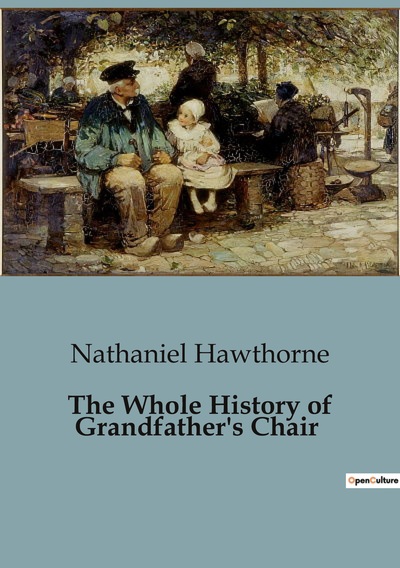
The Whole History of Grandfather's Chair
EAN : 9791041824960
Édition papier
EAN : 9791041824960
Paru le : 9 nov. 2023
17,00 €
16,11 €
Disponible
Pour connaître votre prix et commander, identifiez-vous
Notre engagement qualité
-
 Livraison gratuite
en France sans minimum
de commande -
 Manquants maintenus
en commande
automatiquement -
 Un interlocuteur
unique pour toutes
vos commandes -
 Toutes les licences
numériques du marché
au tarif éditeur -
 Assistance téléphonique
personalisée sur le
numérique -
 Service client
Du Lundi au vendredi
de 9h à 18h
- EAN13 : 9791041824960
- Réf. fournisseur : 316671
- Date Parution : 9 nov. 2023
- Disponibilite : Disponible
- Barème de remise : NS
- Nombre de pages : 116
- Format : H:210 mm L:148 mm E:7 mm
- Poids : 162gr
- Résumé : "The Whole History of Grandfather's Chair" by Nathaniel Hawthorne is a historical narrative that intertwines the story of a venerable chair with the early history of New England. The chair, a symbol of continuity and tradition, serves as a witness to significant events and figures from the 17th century. The narrative begins with the Puritans' migration to America, highlighting the trials and tribulations they faced in establishing new settlements. The chair is first associated with the Lady Arbella, who, along with her husband, sought religious freedom in the New World but tragically succumbed to the harsh conditions. As the story progresses, the chair passes through the hands of various pivotal figures, including Roger Williams, who was banished for his beliefs and founded Providence, and Anne Hutchinson, whose religious meetings led to her own banishment. The narrative also touches on the Quaker persecution, illustrating the intolerance of the time, and the efforts of John Eliot, the "Apostle to the Indians," who sought to convert Native Americans to Christianity. Through these stories, Hawthorne provides a vivid portrayal of the challenges and complexities of early colonial life, using the chair as a narrative device to connect disparate historical events and personalities.
- Biographie : Maître américain du « gothique provincial », Nathaniel Hawthorne est né à Salem, Massachusetts, en 1804. Il a connu la gloire avec La Lettre écarlate (1850). Suivront des chef-d'œuvres tels que La Maison aux sept pignons (1851), Valjoie (1852) ou encore Le Faune de marbre (1860). Il meurt en 1864 à Plymouth dans le New Hampshire.