Nous utilisons des cookies pour améliorer votre expérience. Pour nous conformer à la nouvelle directive sur la vie privée, nous devons demander votre consentement à l’utilisation de ces cookies. En savoir plus.

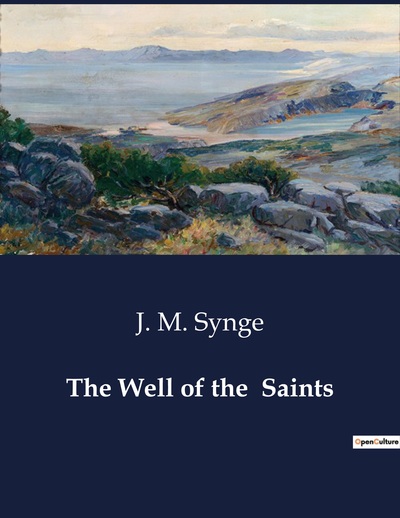
The Well of the Saints
EAN : 9791041995301
Édition papier
EAN : 9791041995301
Paru le : 31 mars 2024
15,00 €
14,22 €
Disponible
Pour connaître votre prix et commander, identifiez-vous
Notre engagement qualité
-
 Livraison gratuite
en France sans minimum
de commande -
 Manquants maintenus
en commande
automatiquement -
 Un interlocuteur
unique pour toutes
vos commandes -
 Toutes les licences
numériques du marché
au tarif éditeur -
 Assistance téléphonique
personalisée sur le
numérique -
 Service client
Du Lundi au vendredi
de 9h à 18h
- EAN13 : 9791041995301
- Réf. fournisseur : 341597
- Date Parution : 31 mars 2024
- Disponibilite : Disponible
- Barème de remise : NS
- Nombre de pages : 42
- Format : H:220 mm L:170 mm E:3 mm
- Poids : 84gr
- Résumé : "The Well of the Saints" by J. M. Synge is a three-act comedy set in a remote mountainous region of eastern Ireland, several centuries ago. The play explores themes of perception, reality, and the human condition through the lives of Martin and Mary Doul, a blind beggar couple. The narrative begins with the couple's daily routine of begging and their belief in their own attractiveness, which is based on the deceptive compliments of the villagers. Their lives take a dramatic turn when a wandering saint arrives, offering to restore their sight with holy water from a sacred well. The couple eagerly accepts, anticipating a new life filled with beauty and admiration. However, the restoration of their sight brings unexpected consequences. Martin and Mary are confronted with the harsh reality of their appearances and the superficiality of their previous beliefs. The villagers, who once flattered them, now mock their disillusionment. The couple's relationship deteriorates as they struggle to reconcile their newfound change with their past illusions. Martin becomes infatuated with the young and attractive Molly Byrne, while Mary grapples with her own insecurities and the loss of her imagined beauty. As the play progresses, both Martin and Mary lose their sight again, returning to their previous state of blindness. This return to darkness symbolizes a retreat into the comfort of ignorance, where they can once again indulge in their fantasies without the burden of reality. Synge's play ultimately questions the value of sight and the nature of true beauty, suggesting that perception is often more powerful than reality.
- Biographie : Synge was born on 16 April 1871, in Newtown Villas, Rathfarnham, County Dublin, the youngest of eight children of upper-middle-class Protestant parents. His father John Hatch Synge was a barrister, and came from a family of landed gentry in Glanmore Castle, County Wicklow. Synge's paternal grandfather, also named John Synge, was an evangelical Christian involved in the movement that became the Plymouth Brethren, and his maternal grandfather, Rrt Traill, was a Church of Ireland rector in Schull, County Cork, who died in 1847 during the Great Irish Famine. He was a descendant of Edward Synge, Archbishop of Tuam, and Edward's son Nicholas, the Bishop of Killaloe. His nephews included mathematician John Lighton Synge and optical microscopy pioneer Edward Hutchinson Synge.