Nous utilisons des cookies pour améliorer votre expérience. Pour nous conformer à la nouvelle directive sur la vie privée, nous devons demander votre consentement à l’utilisation de ces cookies. En savoir plus.

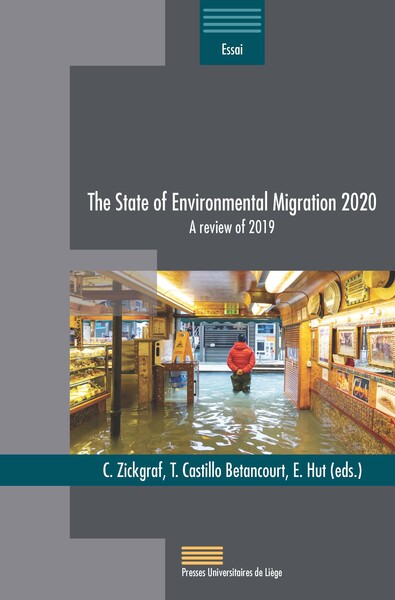
The state of environmental migration 2020 : a review of 2019
Pulg - EAN : 9782875622709
Édition papier
EAN : 9782875622709
Paru le : 8 avr. 2021
25,00 €
23,70 €
Disponible
Pour connaître votre prix et commander, identifiez-vous
Notre engagement qualité
-
 Livraison gratuite
en France sans minimum
de commande -
 Manquants maintenus
en commande
automatiquement -
 Un interlocuteur
unique pour toutes
vos commandes -
 Toutes les licences
numériques du marché
au tarif éditeur -
 Assistance téléphonique
personalisée sur le
numérique -
 Service client
Du Lundi au vendredi
de 9h à 18h
- EAN13 : 9782875622709
- Réf. fournisseur : 978287562270
- Collection : ESSAI
- Editeur : Pulg
- Date Parution : 8 avr. 2021
- Disponibilite : Disponible
- Barème de remise : NS
- Nombre de pages : 160
- Format : H:235.00 mm L:155.00 mm
- Poids : 400gr
- Interdit de retour : Retour interdit
- Résumé : Edited by The Hugo Observatory of the University of Liège, this volume is the tenth in the annual series and the fifth of its kind published with the Presses Universitaires de Liège. The State of Environmental Migration aims to provide its readership with the most updated assessments on recent events and evolving dynamics of environmental migration throughout the world. Each year, the editors select the best graduate student work from the course “Environment and Migration” taught by Caroline Zickgraf at the Paris School of International Affairs (PSIA) of Sciences Po. This year’s authors focus primarily on sudden-onset displacement events, including the Australian megafires, the dam failure in Brumadinho (Brazil), the floods in Budrio (Italy), the Kerala floods (India), and cyclones Idai and Fani in Mozambique and India. The relationship between drought and conflict-related internal displacement in Somalia’s Bay Region, as well as the importance of populations’ perceptions of environmental risk on (im)mobility outcomes during acqua alta in Venice are analysed and discussed. ÉDITION EN FRANCAIS ET ANGLAIS