Nous utilisons des cookies pour améliorer votre expérience. Pour nous conformer à la nouvelle directive sur la vie privée, nous devons demander votre consentement à l’utilisation de ces cookies. En savoir plus.

The Souls of Black Folk
EAN : 9791041806652
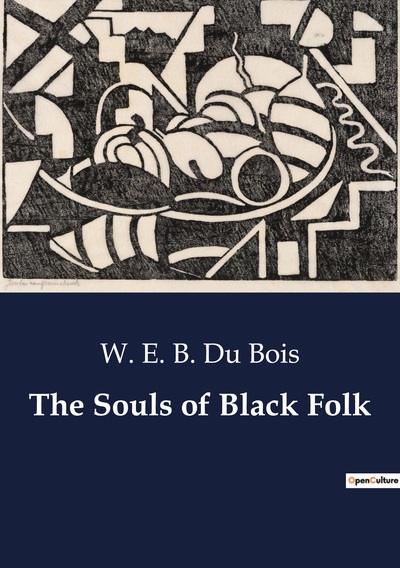
Édition papier
EAN : 9791041806652
Paru le : 21 avr. 2023
21,95 €
20,81 €
Disponible
Pour connaître votre prix et commander, identifiez-vous
Notre engagement qualité
-
 Livraison gratuite
en France sans minimum
de commande -
 Manquants maintenus
en commande
automatiquement -
 Un interlocuteur
unique pour toutes
vos commandes -
 Toutes les licences
numériques du marché
au tarif éditeur -
 Assistance téléphonique
personalisée sur le
numérique -
 Service client
Du Lundi au vendredi
de 9h à 18h
- EAN13 : 9791041806652
- Réf. fournisseur : 290903
- Date Parution : 21 avr. 2023
- Disponibilite : Disponible
- Barème de remise : NS
- Nombre de pages : 250
- Format : H:210 mm L:148 mm E:14 mm
- Poids : 329gr
- Résumé : We rely on your support to help us keep producing beautiful, free, and unrestricted editions of literature for the digital age. Will you support our efforts with a donation? When it was first published in 1903, W. E. B Du Bois's The Souls of Black Folk represented a seismic shift in the discussion of race in the United States. Earlier African-American authors had broken ground with memoirs and autobiographical novels—narrative works that portrayed the African-American experience through the stories of particular individuals. What Du Bois envisioned was a work that portrayed the experience of African Americans as a people. As a professor of sociology, Du Bois naturally gravitated toward a scientific and scholarly approach. But he was also becoming, to his own surprise, a political activist, and found himself increasingly disenchanted with purely intellectual arguments when his fellow African Americans were being lynched, starved, and driven from their land. What emerged from this tension between scholarly rigor and righteous indignation was a book that became a seminal text for both sociology and for the civil rights movement. The fourteen essays in this book weave together historical research, sociological analysis, first-hand reportage, political argument, and an enduring, aspirational belief in the possibility of America. Many of the ideas that Du Bois introduced in the book have become mainstays of modern discourse, including the "veil of race" and the concept of double consciousness. These insights, originally rooted in race, have proven resonant to a wide range of other marginalized groups and have provided a useful framework for understanding the nature of oppression and the path to liberation.