Nous utilisons des cookies pour améliorer votre expérience. Pour nous conformer à la nouvelle directive sur la vie privée, nous devons demander votre consentement à l’utilisation de ces cookies. En savoir plus.

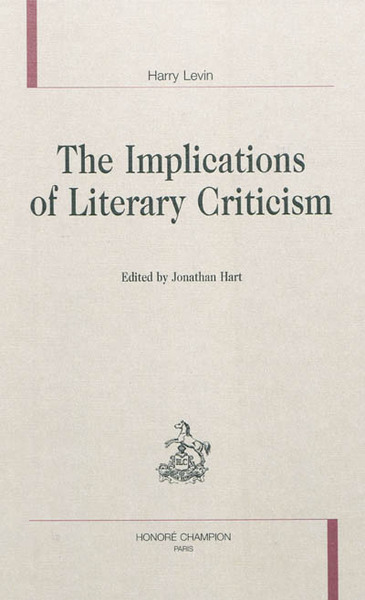
The implications of literary criticism
Champion - EAN : 9782745321985
Édition papier
EAN : 9782745321985
Paru le : 7 déc. 2011
117,00 €
110,90 €
Disponible
Pour connaître votre prix et commander, identifiez-vous
Notre engagement qualité
-
 Livraison gratuite
en France sans minimum
de commande -
 Manquants maintenus
en commande
automatiquement -
 Un interlocuteur
unique pour toutes
vos commandes -
 Toutes les licences
numériques du marché
au tarif éditeur -
 Assistance téléphonique
personalisée sur le
numérique -
 Service client
Du Lundi au vendredi
de 9h à 18h
- EAN13 : 9782745321985
- Réf. fournisseur : 07532198
- Collection : BLGC
- Editeur : Champion
- Date Parution : 7 déc. 2011
- Disponibilite : Disponible
- Barème de remise : NS
- Nombre de pages : 488
- Format : H:30 mm L:235 mm E:155 mm
- Poids : 800gr
- Résumé : In The Implications of Literary Criticism Harry Levin sees literature as both the cause of social effects and the effect of social causes and proposes a complex literary history. Literature represents the part as the whole, involves selection and order, and can suggest additions to nature. Art refracts more than reflects life. To comprehend the angles of refraction, Levin recommends a comparative study of techniques as a complement to an awareness of social backgrounds. The movement of the body of the book is in four parts, from "Theory and Criticism" through "Perspectives" and "Thematics" to "Authors, Artists, Texts." The Appendix, "Reviewing: More Implications on Explanation," includes key reviews and review essays. The first part opens by raising the question of the crisis in interpretation. The second part continues this exploration of the nature of art, literature and interpretation. In the third part, which involves thematics, Levin reminds the reader of the turn from the background of literature-biography, history and sociology-to the text. The fourth part extends from medieval representations though Renaissance poetics and Victorian novels to twentieth century fiction and film.