Nous utilisons des cookies pour améliorer votre expérience. Pour nous conformer à la nouvelle directive sur la vie privée, nous devons demander votre consentement à l’utilisation de ces cookies. En savoir plus.

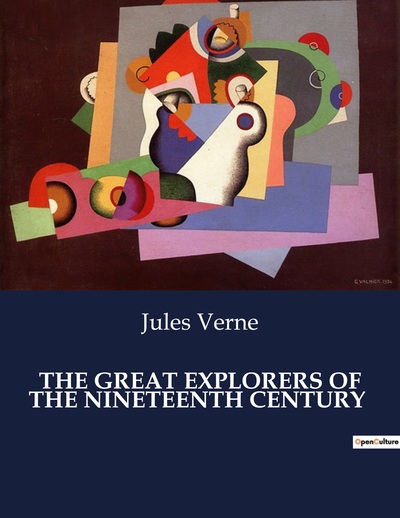
THE GREAT EXPLORERS OF THE NINETEENTH CENTURY
EAN : 9791041981700
Édition papier
EAN : 9791041981700
Paru le : 14 janv. 2024
29,90 €
28,34 €
Disponible
Pour connaître votre prix et commander, identifiez-vous
Notre engagement qualité
-
 Livraison gratuite
en France sans minimum
de commande -
 Manquants maintenus
en commande
automatiquement -
 Un interlocuteur
unique pour toutes
vos commandes -
 Toutes les licences
numériques du marché
au tarif éditeur -
 Assistance téléphonique
personalisée sur le
numérique -
 Service client
Du Lundi au vendredi
de 9h à 18h
- EAN13 : 9791041981700
- Réf. fournisseur : 328349
- Date Parution : 14 janv. 2024
- Disponibilite : Disponible
- Barème de remise : NS
- Nombre de pages : 436
- Format : H:220 mm L:170 mm E:30 mm
- Poids : 756gr
- Résumé : The early 19th century marked a period of significant exploration and discovery, particularly in the Middle East and Africa, despite the political turmoil in Europe. Ulric Jasper Seetzen and John Lewis Burckhardt were two prominent figures who contributed immensely to the geographical and cultural understanding of these regions. Seetzen, a German explorer, embarked on his journey in 1802, focusing on Syria and Palestine. He was the first modern traveler to visit the provinces of Hauran and Jaulan, and he provided detailed accounts of the Decapolis region and the eastern shore of the Jordan River. His travels extended to the Dead Sea and the Arabian Peninsula, where he explored Mecca and Medina, offering valuable insights into these areas. Unfortunately, Seetzen's explorations were cut short by his untimely death in Yemen in 1811. Following in Seetzen's footsteps, Burckhardt, a Swiss traveler supported by the African Association, traveled extensively in the Middle East and Africa. Adopting the guise of a Muslim pilgrim, he explored Syria, the Dead Sea, and the ancient city of Petra. His journey continued into Nubia, where he documented the region's geography and culture, and he was one of the first Europeans to visit the Nubian desert. Burckhardt's observations on the people, their customs, and the ancient ruins he encountered were invaluable to the understanding of these regions. His travels also took him to the Red Sea and the Arabian Peninsula, where he planned to join a caravan to Mecca. Burckhardt's dedication to exploration and his ability to blend into local cultures allowed him to gather a wealth of information, which was later published posthumously, significantly enriching the geographical knowledge of the time.
- Biographie : Jules Verne naît à Nantes en 1828. Après ses études secondaires, il se rend à Paris pour faire son droit, mais il préfère le théâtre et les mondanités. Bien que reçu à sa thèse, il refuse de reprendre la charge d'avoué de son père. Il commence à se passionner de plus en plus pour la science et l'univers des découvertes. Il publie des nouvelles, un roman historique, Martin Paz, et une opérette, Colin-Maillard. Après son mariage en 1857, il devient agent de change à la Bourse pour vivre. Travaillant le jour, il étudie la nuit, les mathématiques, la physique, la géographie, la botanique pour construire son oeuvre.En 1863, il apporte le manuscrit de Cinq semaines en ballon à l'éditeur Hetzel. Cette rencontre sera décisive : ce grand éditeur, enthousiasmé par les manuscrits de Jules Verne, lui propose un contrat propre à stimuler le génie de l'auteur de Vingt Mille Lieues sous les mers, un contrat qui l'attache à sa maison. Grâce à un travail acharné de quarante années, Jules Verne élabore une oeuvre immense.Pour lui, la science, c'est le mouvement incessant qui part de l'homme et y revient avec une provision de connaissances, d'images et de rêves. Il s'agit d'une science apprivoisée, attentive aux besoins de l'homme, prête à le servir sans jamais l'asservir. On est loin de l'âpre réalité qui avait cours à l'époque. Ce naïf, cet émouvant mélange de connaissances, de bricolage ingénieux, de fulgurantes visions futuristes est toujours à hauteur d'homme. Jules Verne est mort le 24 mars 1905 à Amiens, la ville natale de sa femme, où il s'était installé en 1871.