Nous utilisons des cookies pour améliorer votre expérience. Pour nous conformer à la nouvelle directive sur la vie privée, nous devons demander votre consentement à l’utilisation de ces cookies. En savoir plus.

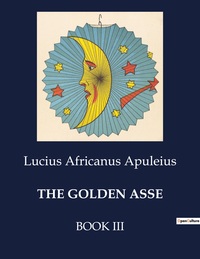
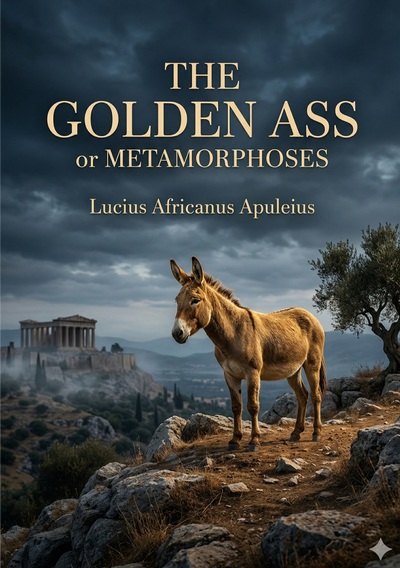
The Golden Ass
EAN : 9791043144127
Édition papier
EAN : 9791043144127
Paru le : 28 mars 2026
26,95 €
25,55 €
Disponible
Pour connaître votre prix et commander, identifiez-vous
Notre engagement qualité
-
 Livraison gratuite
en France sans minimum
de commande -
 Manquants maintenus
en commande
automatiquement -
 Un interlocuteur
unique pour toutes
vos commandes -
 Toutes les licences
numériques du marché
au tarif éditeur -
 Assistance téléphonique
personalisée sur le
numérique -
 Service client
Du Lundi au vendredi
de 9h à 18h
- EAN13 : 9791043144127
- Réf. fournisseur : 448336
- Date Parution : 28 mars 2026
- Disponibilite : Disponible
- Barème de remise : NS
- Nombre de pages : 312
- Format : H:210 mm L:148 mm E:17 mm
- Poids : 406gr
- Résumé : In The Golden Ass, or Metamorphoses, Lucian is on a business trip to Greece when his curiosity gets the best of him and he finds himself accidentally transformed into a donkey. He then narrates his provincial odyssey in a world where old gods rule, myth informs life, Fortune is fickle, Thessalian witches are puissant, and a curious man seeking to learn their craft might well lament making an ass of himself.Apuleius was a second-century speaker and writer born in present-day Algeria who authors, narrates, and is the subject of this bawdy, picaresque, quasi-autobiographical story. He himself traveled extensively, studied philosophy, was initiated into mystery cults, and became a priest. He was also tried for witchcraft, accused of having betrothed his wife Pudentilla by charms other than those of his personality.The novel was translated into "Tudor prose" by Adlington in 1566 during the "golden age of translation," and it was this version that was read by Shakespeare and influenced his work. The novel contains many digression, mythological references, and inset stories, the most significant being the story of Cupid and Psyche.This is the only complete Latin novel from antiquity that has survived to the present day, and has been called "a beginning of modern literature." The Latin original was the one read by Augustine of Hippo who adapted Apuleius' confessional style in his own writing—he even responded to Apuleius directly in his own philosophy. In its theology, The Golden Ass embodies an inclusive monotheism. From Kafka, to Pinocchio, to the motion picture The Fly, the influence of Apuleius and his Metamorphoses continues to be felt.
- Biographie : Aesop (/ˈiːsɒp/ EE-sop; Ancient Greek: Αἴσωπος, Aísōpos; c. 620 - 564 BCE; formerly rendered as Æsop) was a Greek fabulist and storyteller credited with a number of fables now collectively known as Aesop's Fables. Although his existence remains unclear and no writings by him survive, numerous tales credited to him were gathered across the centuries and in many languages in a storytelling tradition that continues to this day. Many of the tales associated with him are characterized by anthropomorphic animal characters. Scattered details of Aesop's life can be found in ancient sources, including Aristotle, Herodotus, and Plutarch. An ancient literary work called The Aesop Romance tells an episodic, probably highly fictional version of his life, including the traditional description of him as a strikingly ugly slave (δοῦλος) who by his cleverness acquires freedom and becomes an adviser to kings and city-states. Older spellings of his name have included Esop(e) and Isope. Depictions of Aesop in popular culture over the last 2,500 years have included many works of art and his appearance as a character in numerous books, films, plays, and television programs.