Nous utilisons des cookies pour améliorer votre expérience. Pour nous conformer à la nouvelle directive sur la vie privée, nous devons demander votre consentement à l’utilisation de ces cookies. En savoir plus.

The Fierce Parade : Chaucer and the Encryption of Homosexuality in the Canterbury Tales
Slatkine - EAN : 9782051021333
Édition papier
EAN : 9782051021333
Paru le : 23 avr. 2010
50,00 €
47,39 €
Disponible
Pour connaître votre prix et commander, identifiez-vous
Notre engagement qualité
-
 Livraison gratuite
en France sans minimum
de commande -
 Manquants maintenus
en commande
automatiquement -
 Un interlocuteur
unique pour toutes
vos commandes -
 Toutes les licences
numériques du marché
au tarif éditeur -
 Assistance téléphonique
personalisée sur le
numérique -
 Service client
Du Lundi au vendredi
de 9h à 18h
- EAN13 : 9782051021333
- Réf. fournisseur : 07102133
- Collection : TUS
- Editeur : Slatkine
- Date Parution : 23 avr. 2010
- Disponibilite : Disponible
- Barème de remise : NS
- Nombre de pages : 213
- Format : H:13 mm L:235 mm E:155 mm
- Poids : 420gr
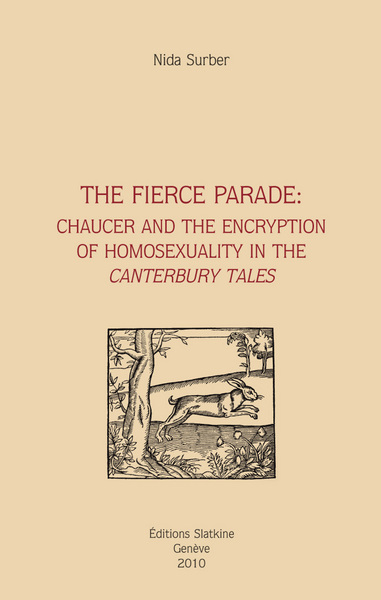
- Résumé : Far from wishing to startle the reader, this book intends to show the space that Chaucer's narrator carefully devotes to his cryptic depiction of homosexuality in the Canterbury Tales. This hidden discourse is here unearthed, thanks to the help of other languages than Middle English, ranging from Old English, Latin and Ancient Greek, to the more contemporary languages, Italian, French of course, including dialectal forms thereof. Beyond the tolerance, social, religious and even sexual, usually ascribed to Chaucer's narrator, there is another logos which clearly states that homosexuality is, on the contrary, an elevated and even sanctified proclivity, sanctified by laws and usages far different from those of Church and society in Chaucer's own time. The Canterbury Tales do thus offer a double discourse: one which appears to be condemning homosexuality, as well as another one where it is praised. The obligation to encryptsuch a logosis obvious, given the social contingences of the time. Indeed a strategy had to be devised in order to include the unutterableand this linguistic, cultural and secular strategy, masterfully embedded in Chaucer's text, is uncovered here. The homosexual figures, by far the majority of the pilgrims, are treated with the same lack of moral judgement that the narrator reserves for the few heterosexual figures, with reactions oscillating between the benign and the cynical, as even perfunctory readers of Chaucer would recognise. The present study offers a timely and necessary reassessment of the Canterbury Tales, an endeavour that, in our jargon, we tend to call "queering the text". Cover: Woodcut from La Vénerie, by Jacques du Fouilloux, first edition, Poitiers, 1561.


