Nous utilisons des cookies pour améliorer votre expérience. Pour nous conformer à la nouvelle directive sur la vie privée, nous devons demander votre consentement à l’utilisation de ces cookies. En savoir plus.

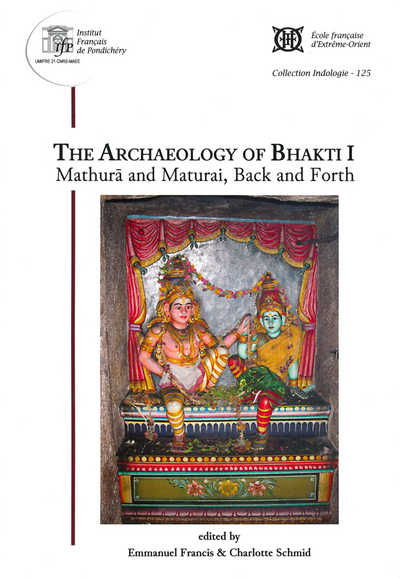
The Archaeology of Bhakti I:
Efeo - EAN : 9782855391397
Édition papier
EAN : 9782855391397
Paru le : 16 juin 2014
43,00 €
40,76 €
Disponible
Pour connaître votre prix et commander, identifiez-vous
Notre engagement qualité
-
 Livraison gratuite
en France sans minimum
de commande -
 Manquants maintenus
en commande
automatiquement -
 Un interlocuteur
unique pour toutes
vos commandes -
 Toutes les licences
numériques du marché
au tarif éditeur -
 Assistance téléphonique
personalisée sur le
numérique -
 Service client
Du Lundi au vendredi
de 9h à 18h
- EAN13 : 9782855391397
- Réf. fournisseur : CI 125
- Collection : COLL. INDOLOGIE
- Editeur : Efeo
- Date Parution : 16 juin 2014
- Disponibilite : Disponible
- Barème de remise : NS
- Nombre de pages : 366
- Format : H:246 mm L:170 mm E:25 mm
- Poids : 850gr
- Interdit de retour : Retour interdit
-
Résumé :
This volume—the outcome of a workshop-cum-conference that took place from 1st to 12th August 2011 in the Pondicherry Centre of the Ecole française d’Extrême-Orient,—is an invitation to practise the “archaeology of Bhakti” with the help of both textual and non-textual sources.
Bhakti, broadly defined as an attitude, a strategy or a style of devotion—one that may be intellectual, emotional or rooted in acts of worship—towards God or the Divine, manifests itself through the personal voices of devotees as well as through the collective effort that constitutes the building of a temple. The “archaeology of Bhakti” aims at correlating different realms of representation, such as texts and images, in order to illuminate the elusive, pan-Indian phenomenon of Bhakti. The focus is on sources, agencies and layers. A special attention is given to inscriptions, which belong both to the realm of artefacts and to that of texts, and which help to distinguish royal demonstrations of Bhakti from local manifestations. In the realm of textual sources, “archaeology” is put to work to identify how literary conventions and concepts have formed and been incorporated, layer upon layer, into a given composition.
After an introduction by the editors about the complexities of the concept and practices of Bhakti in the Indian world, essays by nine scholars explore the phenomena of Bhakti and their chronology from different perspectives (textual, epigraphical, archaeological, iconographical). In the course of these explorations, the reader is transported from the North to the South of the subcontinent, back and forth between Mathura and Maturai.
Contents
Introduction: Towards an Archaeology of Bhakti (Emmanuel Francis & Charlotte Schmid)
- Dharma, Yoga, and Viraha-Bhakti in Buddhacarita and Krsnacarita (Tracy Coleman)
- Skanda/Karttikeya and the Imperial Guptas: Coinage, Religion and Political Ideology (4th-5th century CE) (Cédric Ferrier)
- Bhakti in its Infancy: Genealogy Matters in the Kailasanatha of Kancipuram (Charlotte Schmid)
- Laksmi and the Tigers: A Goddess in the Shadows (Padma Kaimal)
- ‘Woe to Them!’: The Saiva Curse Inscription at Mahabalipuram (7th century CE) (Emmanuel Francis)
- A Medieval Tamil Poem on Bhakti: Tiruppavaiby Antal (Alexander Dubyanskiy)
- On the Non-Valmikian Sources of Kulacekara Alvar’s ‘Mini-Ramayana’ (Suganya Anandakichenin)
- When Tradition Meets Archaeological Reality: The Site of Tiruccentūr (Valérie Gillet)
- The Infant Krsna in the Guruvayur Templewith Particular Reference to the Narayaniya of Narayanabhatta (S.A.S. Sarma)