Nous utilisons des cookies pour améliorer votre expérience. Pour nous conformer à la nouvelle directive sur la vie privée, nous devons demander votre consentement à l’utilisation de ces cookies. En savoir plus.

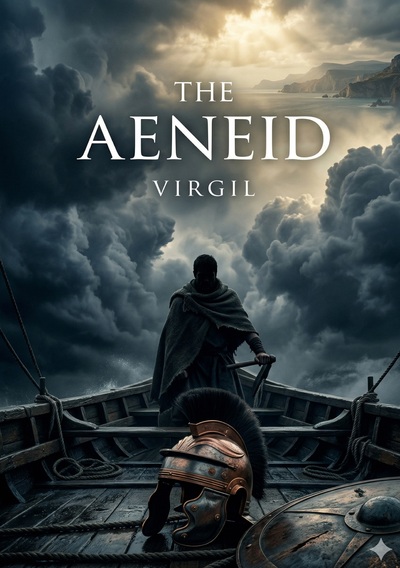
The Aeneid
EAN : 9791043143380
Édition papier
EAN : 9791043143380
Paru le : 24 mars 2026
26,95 €
25,55 €
Disponible
Pour connaître votre prix et commander, identifiez-vous
Notre engagement qualité
-
 Livraison gratuite
en France sans minimum
de commande -
 Manquants maintenus
en commande
automatiquement -
 Un interlocuteur
unique pour toutes
vos commandes -
 Toutes les licences
numériques du marché
au tarif éditeur -
 Assistance téléphonique
personalisée sur le
numérique -
 Service client
Du Lundi au vendredi
de 9h à 18h
- EAN13 : 9791043143380
- Réf. fournisseur : 448324
- Date Parution : 24 mars 2026
- Disponibilite : Disponible
- Barème de remise : NS
- Nombre de pages : 460
- Format : H:210 mm L:148 mm E:25 mm
- Poids : 590gr
- Résumé : Virgil's epic poem begins with Aeneas fleeing the ruins of Troy with his father Anchises and his young son Ascanius, with a plan to make a home in Italy. Because of a prophecy foretelling that the descendants of Aeneas will one day destroy Carthage, Juno's favorite city, Juno orders the god of the winds to unleash a terrible storm. The ships are thrown off course and arrive at an African port. As Aeneas makes his way towards his new home he encounters Dido, Carthage's queen, and falls deeply in love.Although Charles W. Elliot stated that "the modern appreciation of the Iliad and the Odyssey has tended to carry with it a depreciation of the Aeneid," this epic poem continues to inspire artists, writers, and musicians centuries after its first telling. John Dryden's translation captures the musicality of the original Latin verses while avoiding the stumbling of an English translation forced into dactylic hexameter.
- Biographie : Publius Vergilius Maro (Classical Latin: [ˈpuːbliʊs wɛrˈɡɪliʊs ˈmaroː]; 15 October 70 BC - 21 September 19 BC), usually called Virgil or Vergil (/ˈvɜːrdʒɪl/ VUR-jil) in English, was an ancient Roman poet of the Augustan period. He composed three of the most famous poems in Latin literature: the Eclogues (or Bucolics), the Georgics, and the epic Aeneid. Some minor poems, collected in the Appendix Vergiliana, were attributed to him in ancient times, but modern scholars regard these as spurious, with the possible exception of some short pieces. Already acclaimed in his lifetime as a classic author, Virgil rapidly replaced Ennius and other earlier authors as a standard school text, and stood as the most popular Latin poet through late antiquity, the Middle Ages, and early modernity, exerting major influence on Western literature. Geoffrey Chaucer assigned Virgil a uniquely prominent position in history in The House of Fame (1374-85), describing him as standing on a pilere / that was of tinned yren clere ("on a pillar that was of bright tin-plated iron"), and in the Divine Comedy, in which Virgil appears as the author's guide through Hell and Purgatory, Dante pays tribute to Virgil with the words tu se' solo colui da cu'io tolsi / lo bello stile che m'ha fatto onore (Inf. I.86-7) ("thou art alone the one from whom I took the beautiful style that has done honour to me"). In the 20th century, T. S. Eliot famously began a lecture on the subject "What Is a Classic?" by asserting as self-evidently true that "whatever the definition we arrive at, it cannot be one which excludes Virgil - we may say confidently that it must be one which will expressly reckon with him".