Nous utilisons des cookies pour améliorer votre expérience. Pour nous conformer à la nouvelle directive sur la vie privée, nous devons demander votre consentement à l’utilisation de ces cookies. En savoir plus.

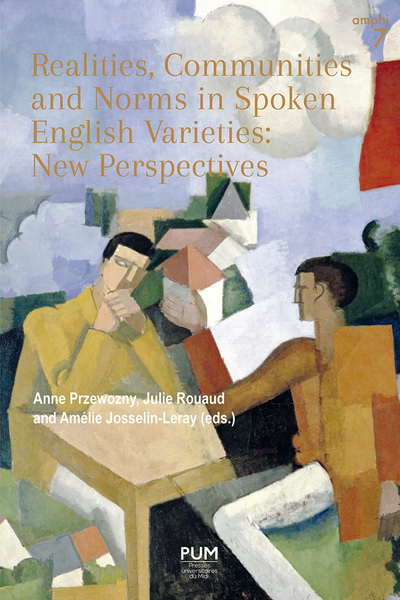
Realities, Communities and Norms in Spoken English Varieties: New Perspectives
Pu Midi - EAN : 9782810713837
Édition papier
EAN : 9782810713837
Paru le : 28 janv. 2027
19,00 €
18,01 €
Bientôt disponible
Pour connaître votre prix et commander, identifiez-vous
A paraître 28 janv. 2027
Notre engagement qualité
-
 Livraison gratuite
en France sans minimum
de commande -
 Manquants maintenus
en commande
automatiquement -
 Un interlocuteur
unique pour toutes
vos commandes -
 Toutes les licences
numériques du marché
au tarif éditeur -
 Assistance téléphonique
personalisée sur le
numérique -
 Service client
Du Lundi au vendredi
de 9h à 18h
- EAN13 : 9782810713837
- Collection : AMPHI 7
- Editeur : Pu Midi
- Date Parution : 28 janv. 2027
- Disponibilite : Pas encore paru
- Barème de remise : NS
- Nombre de pages : 160
- Format : H:240 mm L:160 mm
- Poids : 0gr
-
Résumé :
À partir d'un éventail théorique allant de la phonologie à la sociophonétique et à l'interphonologie, cet ouvrage explore les liens entre facteurs cognitifs, sociaux et culturels dans la variation et le changement linguistique, l’accentuation lexicale, les usages et normes en anglais oral.
Involving a wide array of theoretical and methodological frameworks from cognitive phonology to corpus phonology, and from sociophonetics to interphonology, the eight chapters of the volume focus on the empirically-oriented description and modelling of spoken varieties of English, both native and non-native ones. The authors’ in-depth investigations range from the interplay of cognitive, social and cultural factors in phonological and phonetic variation and change (both at the dialectal and sociolectal levels, including the singing voice), to the investigation of lexical stress at the formal and empirical levels, as well as usages and norms. It draws upon the central notions of indexicality, self-perception and perception of speakers’ linguistic environments and communities, and to representations of native and non-native English-speaking communities and their relationship to traditional standard varieties.