Nous utilisons des cookies pour améliorer votre expérience. Pour nous conformer à la nouvelle directive sur la vie privée, nous devons demander votre consentement à l’utilisation de ces cookies. En savoir plus.

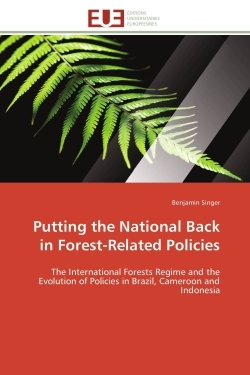
Putting the national back in forest-related policies
Univ Europeenne - EAN : 9783841788146
Édition papier
EAN : 9783841788146
Paru le : 6 mars 2012
98,00 €
92,89 €
Disponible
Pour connaître votre prix et commander, identifiez-vous
Notre engagement qualité
-
 Livraison gratuite
en France sans minimum
de commande -
 Manquants maintenus
en commande
automatiquement -
 Un interlocuteur
unique pour toutes
vos commandes -
 Toutes les licences
numériques du marché
au tarif éditeur -
 Assistance téléphonique
personalisée sur le
numérique -
 Service client
Du Lundi au vendredi
de 9h à 18h
- EAN13 : 9783841788146
- Réf. fournisseur : 5206581
- Editeur : Univ Europeenne
- Date Parution : 6 mars 2012
- Disponibilite : Disponible
- Barème de remise : NS
- Nombre de pages : 440
- Format : H:229 mm L:152 mm E:25 mm
- Poids : 643gr
- Interdit de retour : Retour interdit
- Résumé : The relationship between the International Forests Regime (IFR) and Forest-Related Policies (FRPs) is a frequently addressed issue in tropical forest management, yet the lack of rigorous research has led to a number of misconceptions. This book aims to analyse this issue from a public policy perspective and test a number of theoretical approaches to explaining change in public policy. In a bid to shed light on the mechanisms that underlie variations in policy change, a new heuristic concept known as network projections is elaborated. This model reveals the IFR as a plural and fragmentary entity which has often led to it being perceived as ineffective. It also helps to break down the history of Brazilian, Cameroonian and Indonesian FRPs and explain them according to the direction of change. Above all, the network projection model shows that the national sphere continues to be by far the main source of change in national FRPs. This thesis is the first to investigate the relationship between the IFR and FRPs on a global scale and in depth, and with a balance of field-based data and policy theory, it is aimed at environmental policy practitioners, analysts and theorists alike.
