Nous utilisons des cookies pour améliorer votre expérience. Pour nous conformer à la nouvelle directive sur la vie privée, nous devons demander votre consentement à l’utilisation de ces cookies. En savoir plus.

Principles Of Geology
EAN : 9791041985418
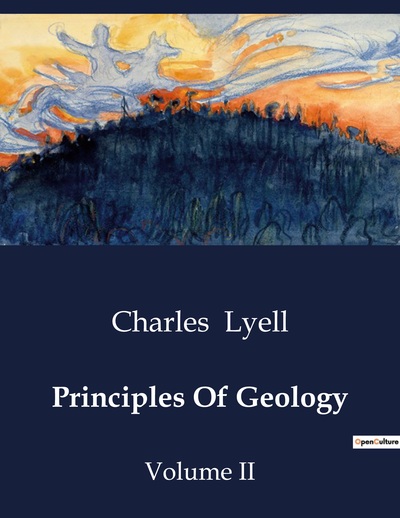
Édition papier
EAN : 9791041985418
Paru le : 12 févr. 2024
25,90 €
24,55 €
Disponible
Pour connaître votre prix et commander, identifiez-vous
Notre engagement qualité
-
 Livraison gratuite
en France sans minimum
de commande -
 Manquants maintenus
en commande
automatiquement -
 Un interlocuteur
unique pour toutes
vos commandes -
 Toutes les licences
numériques du marché
au tarif éditeur -
 Assistance téléphonique
personalisée sur le
numérique -
 Service client
Du Lundi au vendredi
de 9h à 18h
- EAN13 : 9791041985418
- Réf. fournisseur : 334195
- Date Parution : 12 févr. 2024
- Disponibilite : Disponible
- Barème de remise : NS
- Nombre de pages : 336
- Format : H:220 mm L:170 mm E:23 mm
- Poids : 587gr
- Résumé : The text provides a comprehensive overview of the historical development of geological thought, tracing its origins from ancient Eastern and Egyptian philosophies to the more structured theories of Greek philosophers like Pythagoras and Aristotle. Early cosmogonies, such as those found in the Vedas and the Ordinances of Menu, introduced the concept of the world's cyclical destruction and renewal, a theme echoed in Egyptian and later Greek thought. These ancient doctrines often attributed geological changes to divine intervention or cyclical cosmic events, such as the Annus Magnus. The Greeks, particularly through the works of philosophers like Strabo and Aristotle, began to observe and theorize about natural processes like erosion, sedimentation, and volcanic activity, laying the groundwork for a more scientific approach to understanding the Earth's history. Strabo's insights into the role of earthquakes and volcanic activity in shaping the Earth's surface were particularly advanced for his time. The text also highlights the limitations of ancient geological thought, noting that while they recognized changes in the Earth's surface, they did not fully grasp the implications for the history of life on Earth. The work of later scholars, such as Pliny, continued to compile observations of natural phenomena, but it wasn't until much later that geology would emerge as a distinct scientific discipline, separate from cosmogony and mythology.
- Biographie : Charles Lyell, 1ᵉʳ baronnet, est un géologue britannique qui a popularisé l'uniformitarisme.