Nous utilisons des cookies pour améliorer votre expérience. Pour nous conformer à la nouvelle directive sur la vie privée, nous devons demander votre consentement à l’utilisation de ces cookies. En savoir plus.

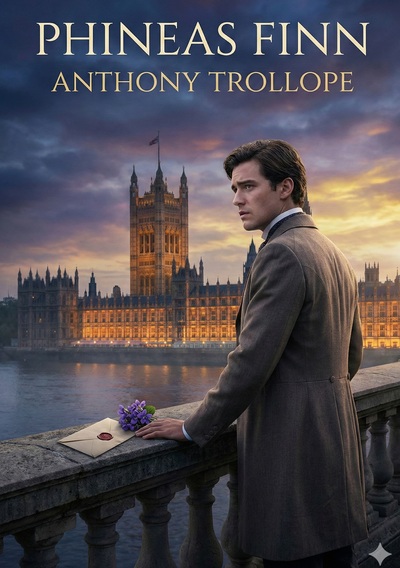
Phineas Finn
EAN : 9791043142697
Édition papier
EAN : 9791043142697
Paru le : 20 mars 2026
39,99 €
37,91 €
Disponible
Pour connaître votre prix et commander, identifiez-vous
Notre engagement qualité
-
 Livraison gratuite
en France sans minimum
de commande -
 Manquants maintenus
en commande
automatiquement -
 Un interlocuteur
unique pour toutes
vos commandes -
 Toutes les licences
numériques du marché
au tarif éditeur -
 Assistance téléphonique
personalisée sur le
numérique -
 Service client
Du Lundi au vendredi
de 9h à 18h
- EAN13 : 9791043142697
- Réf. fournisseur : 444796
- Date Parution : 20 mars 2026
- Disponibilite : Disponible
- Barème de remise : NS
- Nombre de pages : 904
- Format : H:210 mm L:148 mm E:48 mm
- Poids : 1.144kg
- Résumé : High politics are not always centrally in view in Anthony Trollope's Palliser novels, but parliamentary life comes to the fore throughout Phineas Finn, the second in the series.The hero of the tale is the young son of an Irish country doctor, now attaining manhood and striking out in life. Although training for the Bar, he feels the lure of Parliament and manages to secure a seat. Blessed with good fortune, "comely inside and out," and pleasant company to both women and men, he begins to climb the ladder. Along with his undoubted triumphs there come also palpable failures—social as well as political. Leaving behind a sweetheart in Ireland, he encounters women of high status and fashion in London who place their own claims on his heart.While Phineas is clearly the hero of the novel bearing his name, the lives of a number of remarkable women become intertwined with his own, each of whom he loves, after a fashion. The portrait of Lady Laura Standish—who serves as his political muse as well—is especially poignantly drawn, while Violet Effingham and the somewhat mysterious Madame Max Goesler each have an individuated strength and depth of character. Each, too, mirrors in different ways the dilemma faced by Phineas in his political career: whether it is better to be subservient and "succeed," or maintain independence and risk being an outcast.The writing of Phineas Finn coincided with Trollope's own political awakening and aspirations. While working on this novel, he was also composing a memoir of Lord Palmerston, the Prime Minister who had died in office only a couple years previously. (The memoir remained unpublished until 1882.) By this point in his mid fifties, Trollope made his own attempt to secure a seat as a member of Parliament in 1868, failed, and was scarred by the experience. The literary critic Michael Sadleir characterized Trollope's parliamentary fiction as showing a "preoccupation with political society [but] indifference to political theory," perhaps unfairly. Especially in the character of Mr. Monk, Phineas's chief political mentor, much wisdom for parliamentary life is imparted.Trollope's political failure does not yet cast a shadow on the optimism which pervades Phineas Finn. The novelist's own views would ripen along with those of his characters as the series took shape. Still, in his autobiography Trollope was able to declare, "Phineas Finn, I certainly think, was successful from first to last."
- Biographie : Anthony Trollope was the son of barrister Thomas Anthony Trollope and the novelist and travel writer Frances Milton Trollope. Though a clever and well-educated man and a Fellow of New College, Oxford, Thomas Trollope failed at the Bar due to his bad temper. Ventures into farming proved unprofitable, and he did not receive an expected inheritance when an elderly childless uncle remarried and had children. Thomas Trollope was the son of Rev. (Thomas) Anthony Trollope, rector of Cottered, Hertfordshire, himself the sixth son of Sir Thomas Trollope, 4th Baronet. The baronetcy later came to descendants of Anthony Trollope's second son, Frederic. As a son of landed gentry, Thomas Trollope wanted his sons to be raised as gentlemen and to attend Oxford or Cambridge. Anthony Trollope suffered much misery in his boyhood owing to the disparity between the privileged background of his parents and their comparatively small means.