Nous utilisons des cookies pour améliorer votre expérience. Pour nous conformer à la nouvelle directive sur la vie privée, nous devons demander votre consentement à l’utilisation de ces cookies. En savoir plus.

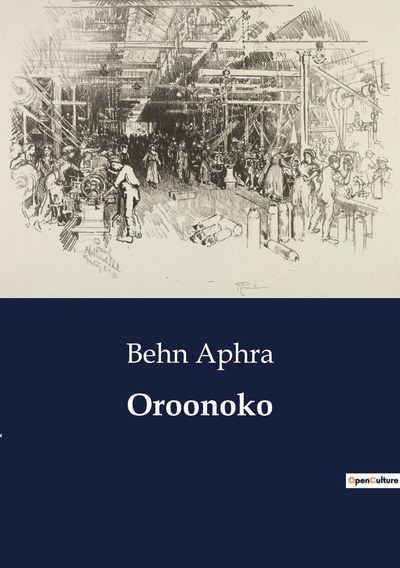
Oroonoko
EAN : 9791041849017
Édition papier
EAN : 9791041849017
Paru le : 6 juil. 2023
22,95 €
21,75 €
Disponible
Pour connaître votre prix et commander, identifiez-vous
Notre engagement qualité
-
 Livraison gratuite
en France sans minimum
de commande -
 Manquants maintenus
en commande
automatiquement -
 Un interlocuteur
unique pour toutes
vos commandes -
 Toutes les licences
numériques du marché
au tarif éditeur -
 Assistance téléphonique
personalisée sur le
numérique -
 Service client
Du Lundi au vendredi
de 9h à 18h
- EAN13 : 9791041849017
- Réf. fournisseur : 300403
- Date Parution : 6 juil. 2023
- Disponibilite : Disponible
- Barème de remise : NS
- Nombre de pages : 104
- Format : H:210 mm L:148 mm E:6 mm
- Poids : 147gr
- Résumé : "Oroonoko" by Aphra Behn is a seminal work of English literature that delves into the themes of colonialism, slavery, and the clash of cultures. The narrative follows the tragic story of Oroonoko, an African prince who is betrayed and sold into slavery in Surinam, a British colony. Behn's work is notable for its early critique of the inhumanity of slavery and its exploration of the complexities of power and identity. The novel is structured as a first-person account, with the narrator claiming to have witnessed the events firsthand, which adds a layer of authenticity and immediacy to the story. Behn's portrayal of Oroonoko is both heroic and tragic, as he embodies noble qualities yet is ultimately doomed by the oppressive structures of colonial rule. The novel also reflects Behn's own experiences and observations as a woman navigating the literary and political landscapes of the 17th century. Through "Oroonoko," Behn challenges contemporary perceptions of race and class, offering a nuanced perspective on the moral and ethical dilemmas of her time. The work remains a critical text for understanding the historical context of slavery and colonialism, as well as the development of the novel as a literary form.
