Nous utilisons des cookies pour améliorer votre expérience. Pour nous conformer à la nouvelle directive sur la vie privée, nous devons demander votre consentement à l’utilisation de ces cookies. En savoir plus.

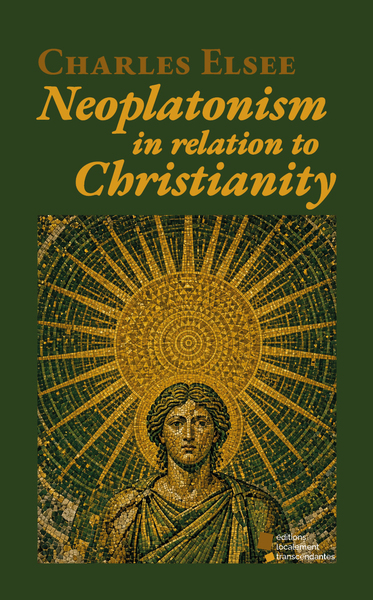
Neoplatonism in relation to Christianity
EAN : 9782383660774
Édition papier
EAN : 9782383660774
Paru le : 24 sept. 2026
13,89 €
13,17 €
Disponible
Pour connaître votre prix et commander, identifiez-vous
Notre engagement qualité
-
 Livraison gratuite
en France sans minimum
de commande -
 Manquants maintenus
en commande
automatiquement -
 Un interlocuteur
unique pour toutes
vos commandes -
 Toutes les licences
numériques du marché
au tarif éditeur -
 Assistance téléphonique
personalisée sur le
numérique -
 Service client
Du Lundi au vendredi
de 9h à 18h
- EAN13 : 9782383660774
- Date Parution : 24 sept. 2026
- Disponibilite : Disponible
- Barème de remise : NS
- Nombre de pages : 165
- Format : H:127 mm L:203 mm E:10 mm
- Poids : 240gr
- Interdit de retour : Retour interdit
- Résumé : Plotinus is remembered as a sage outside of time, a pure Greek mind absorbed in contemplation of the One. Charles Elsee saw a school at war. In the third century the Church had grown in numbers and in intellectual strength until it threatened to overpower the old religion of the Empire. Persecution had failed. The struggle moved onto the ground of argument, and there, Elsee argues, Neoplatonism was never merely a philosophical revival. It was the most serious attempt of the ancient world to meet Christianity on its own ground and to prove the superiority of the old religion. Plotinus's silence about the Christians was deliberate. He wrote against Gnostics whom his own disciple classed as Christians, and he took from Philo the doctrine of the divine Intellect while carefully avoiding the word Logos, which Christian use had claimed. The school took what it could use and fought the rest. It kept the infinite God and rejected the God who creates, wills and loves, and with him the equality of all men as creatures. Porphyry, Hierocles and Julian carried on the same war by other means. Porphyry wrote fifteen books against the Christians. Pagan apologists set up Apollonius of Tyana as a rival to Christ, a wonder-worker drawn from the Gospels and corrected to suit the old gods. Hierocles, governor of Bithynia, backed the pen with the sword, and Julian tried to restore paganism as the religion of the Empire. Then the tide turned. Augustine passed through Neoplatonism on his way to baptism. Hypatia's pupil Synesius became a bishop. The writings of "Dionysius the Areopagite" poured the philosophy of Proclus into the mould of Christian mysticism, and centuries later Eriugena drew his inspiration from them. The Church absorbed the philosophy that had set out to defeat it, and with it a hierarchy of being that sanctioned hierarchies on earth, a salvation of the soul alone and a Kingdom deferred to eternity. Christian theology has carried its imprint ever since. Clear and compact, Elsee's book is at once a first introduction to Neoplatonism and a key to the history of Christian theology. This edition A new introduction defends Elsee's thesis against the image of Plotinus that still prevails today, that of a pure Greek sage untouched by his century. It shows that Plotinus's silence about the Christians was a strategy, that the Gnostics he attacked were Christians, and that Neoplatonism hid what it owed to Philo. It then follows the thread Elsee leaves open: the philosophy that set out to defeat Christianity ended by shaping its theology from within. The complete text of 1908, newly typeset, with a thematic index.