Nous utilisons des cookies pour améliorer votre expérience. Pour nous conformer à la nouvelle directive sur la vie privée, nous devons demander votre consentement à l’utilisation de ces cookies. En savoir plus.

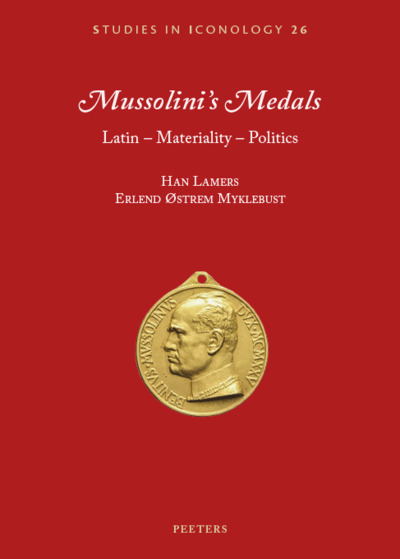
Mussolini's Medals
EAN : 9789042956049
Édition papier
EAN : 9789042956049
Paru le : 31 déc. 2025
50,88 €
48,23 €
Disponible
Pour connaître votre prix et commander, identifiez-vous
Notre engagement qualité
-
 Livraison gratuite
en France sans minimum
de commande -
 Manquants maintenus
en commande
automatiquement -
 Un interlocuteur
unique pour toutes
vos commandes -
 Toutes les licences
numériques du marché
au tarif éditeur -
 Assistance téléphonique
personalisée sur le
numérique -
 Service client
Du Lundi au vendredi
de 9h à 18h
- EAN13 : 9789042956049
- Collection : STUDIES IN ICON
- Date Parution : 31 déc. 2025
- Disponibilite : Disponible
- Barème de remise : NS
- Nombre de pages : 115
- Format : 1.00 x 17.00 x 24.00 cm
- Poids : 350gr
- Résumé : Throughout history, medals and medallions have been pivotal in political material culture, commemorating both victories and defeats, honouring acts of bravery, and advancing ideological messages. The display of language is an eye-catching feature of these objects, yet the legends inscribed on them often do not receive the attention they deserve. When mentioned, these texts are commonly treated only as historical evidence, disconnected from the surfaces on which they appear. However, legends add symbolic significance to the objects they adorn, while the medals’ material properties, in turn, shape and frame the texts’ ideological meaning. This essay explores the role of language in political material culture by examining the use of Latin legends on political medals from the ventennio fascista (1922-1943). It argues that the language of ancient Rome was central to the political iconography of these objects. The essay demonstrates how the use of Latin changed the medals’ symbolic significance and served to reinforce Fascism’s claims to Italy’s Roman, Christian, and Renaissance heritages. Moreover, this essay investigates how the material properties and political symbolism of the medals transformed Latin phrases – often predating Fascism by centuries – into Fascist slogans. The epilogue finally examines how, immediately after Mussolini’s downfall, the period’s foremost medallist, Aurelio Mistruzzi, sought to liberate Latin from its prior associations with Fascism. Combining iconological analysis with philological close-reading techniques, Mussolini's Medals offers a fresh perspective on the display of Latin in political material culture.