Nous utilisons des cookies pour améliorer votre expérience. Pour nous conformer à la nouvelle directive sur la vie privée, nous devons demander votre consentement à l’utilisation de ces cookies. En savoir plus.

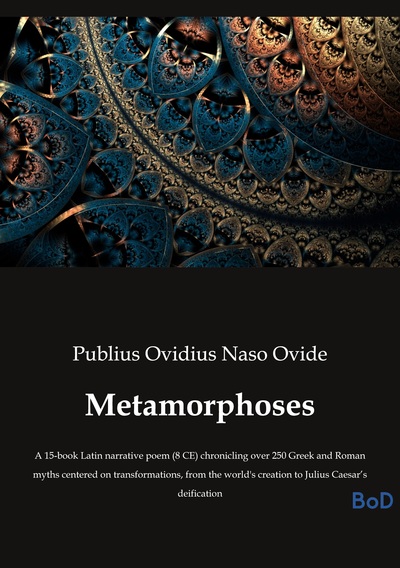
Metamorphoses
EAN : 9791043128523
Édition papier
EAN : 9791043128523
Paru le : 4 févr. 2026
35,00 €
33,18 €
Disponible
Pour connaître votre prix et commander, identifiez-vous
Notre engagement qualité
-
 Livraison gratuite
en France sans minimum
de commande -
 Manquants maintenus
en commande
automatiquement -
 Un interlocuteur
unique pour toutes
vos commandes -
 Toutes les licences
numériques du marché
au tarif éditeur -
 Assistance téléphonique
personalisée sur le
numérique -
 Service client
Du Lundi au vendredi
de 9h à 18h
- EAN13 : 9791043128523
- Réf. fournisseur : 439267
- Date Parution : 4 févr. 2026
- Disponibilite : Disponible
- Barème de remise : NS
- Nombre de pages : 584
- Format : H:210 mm L:148 mm E:31 mm
- Poids : 745gr
- Résumé : Ovid's "Metamorphoses" is an epic poem that weaves together a vast collection of Greek and Roman myths, spanning from the creation of the world to the poet's own time. The central and unifying theme is transformation, or metamorphosis, which manifests in countless forms: humans into animals, plants, stones, constellations, or even deities. The narrative begins with cosmogony, the four ages of man, and the great deluge, then progresses through a rich tapestry of divine interventions, heroic deeds, and human follies. Key stories include the tragic tales of Phaeton, Echo and Narcissus, Pyramus and Thisbe, and Niobe; the adventures of heroes like Perseus, Cadmus, Theseus, Hercules, and Aeneas; and the magical exploits of figures such as Medea and Circe. The poem explores themes of hubris, divine punishment, tragic love, revenge, hospitality, and the capricious power of the gods. It also incorporates philosophical reflections on the impermanence of forms, the cyclical nature of existence, and the transmigration of souls, notably through Pythagoras's discourse. The work culminates with the founding of Rome, the deification of historical figures like Julius Caesar and Augustus, and Ovid's assertion of his poem's immortality, presenting a comprehensive mythological history of the world through the lens of continuous change.