Nous utilisons des cookies pour améliorer votre expérience. Pour nous conformer à la nouvelle directive sur la vie privée, nous devons demander votre consentement à l’utilisation de ces cookies. En savoir plus.

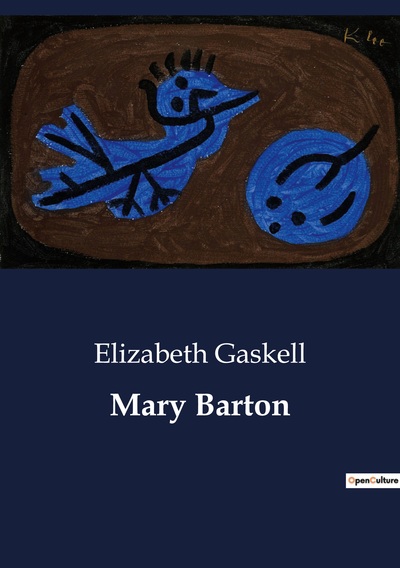
Mary Barton
EAN : 9791041848904
Édition papier
EAN : 9791041848904
Paru le : 24 juil. 2023
37,95 €
35,97 €
Disponible
Pour connaître votre prix et commander, identifiez-vous
Notre engagement qualité
-
 Livraison gratuite
en France sans minimum
de commande -
 Manquants maintenus
en commande
automatiquement -
 Un interlocuteur
unique pour toutes
vos commandes -
 Toutes les licences
numériques du marché
au tarif éditeur -
 Assistance téléphonique
personalisée sur le
numérique -
 Service client
Du Lundi au vendredi
de 9h à 18h
- EAN13 : 9791041848904
- Réf. fournisseur : 294023
- Date Parution : 24 juil. 2023
- Disponibilite : Disponible
- Barème de remise : NS
- Nombre de pages : 626
- Format : H:210 mm L:148 mm E:33 mm
- Poids : 797gr
- Résumé : "Mary Barton" by Elizabeth Gaskell is a poignant narrative set in the industrial city of Manchester during the 19th century. The story revolves around the Barton family, particularly focusing on John Barton, a mill worker, and his daughter Mary. The novel opens with the sudden disappearance of Esther, Mary's aunt, which casts a shadow over the family. As the narrative unfolds, the harsh realities of working-class life are depicted through the Bartons' struggles with poverty, illness, and loss. John's deep-seated resentment towards the wealthy mill owners is fueled by the death of his son, Tom, due to lack of nourishment during a period of unemployment. This tragedy intensifies his involvement in the workers' movement and his growing animosity towards the upper class. Meanwhile, Mary, a beautiful and spirited young woman, dreams of a better life and aspires to become a dressmaker, rejecting the idea of domestic service. Her beauty and metamorphosis set her apart, but also lead her into complex social dynamics. The novel explores themes of class conflict, social injustice, and the quest for personal and collective dignity. Gaskell's vivid portrayal of the struggles faced by the working class in Manchester provides a critical commentary on the socio-economic disparities of the time, while also highlighting the resilience and humanity of those who endure such hardships.
- Biographie : Anatole France, de son vrai nom François-Anatole Thibault, naît à Paris en 1844 et meurt en 1924. Fils d'un libraire, il grandit entouré de livres, ce qui nourrit sa passion précoce pour la littérature. Après des études classiques, il travaille comme bibliothécaire tout en se consacrant à l'écriture. Sa carrière littéraire débute véritablement avec « Le Crime de Sylvestre Bonnard » (1881), qui lui vaut le prix de l'Académie française. S'ensuit une production prolifique de romans, nouvelles, et essais, qui établissent sa réputation d'écrivain majeur de la Belle Époque. Parmi ses oeuvres les plus célèbres figurent « Thaïs » (1890), « Le Lys rouge » (1894), et « Les Dieux ont soif » (1912). Le style d'Anatole France se caractérise par son élégance classique, son ironie subtile, et son scepticisme bienveillant. Humaniste et rationaliste, il n'hésite pas à critiquer les institutions et les dogmes de son époque. Son engagement dans l'affaire Dreyfus marque un tournant dans sa vie, le poussant vers un socialisme modéré. Élu à l'Académie française en 1896, France reçoit le Prix Nobel de littérature en 1921, consécration d'une carrière littéraire exceptionnelle. Son influence sur la littérature française du XXe siècle est considérable, et ses oeuvres continuent d'être lues et étudiées pour leur finesse d'analyse et leur portée universelle. Anatole France reste dans l'histoire littéraire comme un maître de l'ironie et de la satire sociale, dont l'oeuvre reflète les bouleversements intellectuels et politiques de son époque.