Nous utilisons des cookies pour améliorer votre expérience. Pour nous conformer à la nouvelle directive sur la vie privée, nous devons demander votre consentement à l’utilisation de ces cookies. En savoir plus.

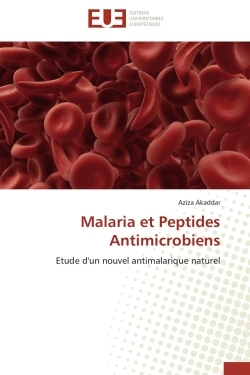
Malaria et peptides antimicrobiens
Univ Europeenne - EAN : 9786131540431
Édition papier
EAN : 9786131540431
Paru le : 13 oct. 2010
69,90 €
66,26 €
Disponible
Pour connaître votre prix et commander, identifiez-vous
Notre engagement qualité
-
 Livraison gratuite
en France sans minimum
de commande -
 Manquants maintenus
en commande
automatiquement -
 Un interlocuteur
unique pour toutes
vos commandes -
 Toutes les licences
numériques du marché
au tarif éditeur -
 Assistance téléphonique
personalisée sur le
numérique -
 Service client
Du Lundi au vendredi
de 9h à 18h
- EAN13 : 9786131540431
- Réf. fournisseur : 4404032
- Editeur : Univ Europeenne
- Date Parution : 13 oct. 2010
- Disponibilite : Disponible
- Barème de remise : NS
- Nombre de pages : 224
- Format : H:229 mm L:152 mm E:13 mm
- Poids : 336gr
- Interdit de retour : Retour interdit
- Résumé : Catestatin is an endogenous peptide derived from Chromogranin A. Bovine Catestatin and its active domain Cateslytin display powerful antimicrobial activities. We have tested the activity of bovine and human Catestatin, Cateslytin and other related peptides on in vitro growth of Plasmodium falciparum. Human Catestatin inhibits, at the micromolar range, the growth of several strains of P. falciparum. A relation structure-function analysis demonstrates the role of the LSFR median region for this activity. The non-lytic activity of Catestatin for the host cells was confirmed by its unique co-localization with merozoites. At the merozoite level we observe two complementary mechanisms: (i) a disordering (reduction in thickness) of the phosphatidylcholine component of the Plasmodium membrane by the active domain Cateslytin using solid-state NMR and polarized ATR-FTIR suggesting a penetrating peptide and (ii) a specific interaction between Catestatin and Plasmepsins II and IV leading to inhibition of haemoglobin degradation and reduction availability of nutrients for Plasmodium protein synthesis.
