Nous utilisons des cookies pour améliorer votre expérience. Pour nous conformer à la nouvelle directive sur la vie privée, nous devons demander votre consentement à l’utilisation de ces cookies. En savoir plus.

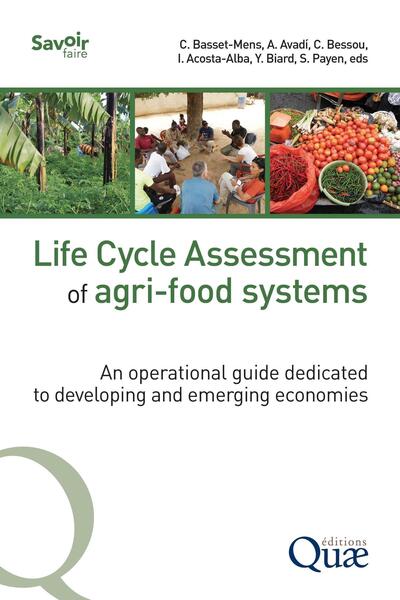
Life Cycle Assessment of agri-food systems
Quae - EAN : 9782759234660
Édition papier
EAN : 9782759234660
Paru le : 10 déc. 2021
35,00 €
33,18 €
Disponible
Pour connaître votre prix et commander, identifiez-vous
Notre engagement qualité
-
 Livraison gratuite
en France sans minimum
de commande -
 Manquants maintenus
en commande
automatiquement -
 Un interlocuteur
unique pour toutes
vos commandes -
 Toutes les licences
numériques du marché
au tarif éditeur -
 Assistance téléphonique
personalisée sur le
numérique -
 Service client
Du Lundi au vendredi
de 9h à 18h
- EAN13 : 9782759234660
- Réf. fournisseur : 197523
- Collection : SAVOIR FAIRE
- Editeur : Quae
- Date Parution : 10 déc. 2021
- Disponibilite : Disponible
- Barème de remise : NS
- Format : H:240 mm L:160 mm E:13 mm
- Poids : 385gr
- Interdit de retour : Retour interdit
- Résumé : Life Cycle Assessment (LCA) is the internationally recognized method to assess the environmental impacts of products and services. Its application to agri-food systems in developing or emerging contexts is recent and represents many challenges of scientific, partnerial and operational nature. With more than 10 years of scientific and field experience, the CIRAD LCA team has synthesized, with other internationally recognized experts, the best knowledge and approaches available to apply LCA under these conditions. This operational guide is a useful tool for LCA practitioners; it provides best practice recommendations to carry out LCA studies on agri-food products in developing and emerging contexts.
- Biographie : Environmental assessment expert at CIRAD since 2015, has been involved in many studies applying LCA to agri-food production systems, especially in Latin America and Africa. His main research interests include the development of adapted models for direct field emissions, soil carbon sequestration and terrestrial ecotoxicity. One of his main drivers is to advance the agroecological transition of vegetable production in periurban areas of developing countries.