Nous utilisons des cookies pour améliorer votre expérience. Pour nous conformer à la nouvelle directive sur la vie privée, nous devons demander votre consentement à l’utilisation de ces cookies. En savoir plus.

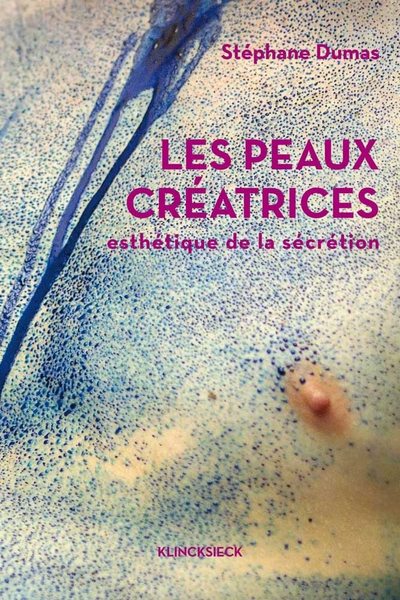
Les Peaux créatrices
Klincksieck - EAN : 9782252039168
Édition papier
EAN : 9782252039168
Paru le : 10 avr. 2014
53,00 €
50,24 €
Disponible
Pour connaître votre prix et commander, identifiez-vous
Notre engagement qualité
-
 Livraison gratuite
en France sans minimum
de commande -
 Manquants maintenus
en commande
automatiquement -
 Un interlocuteur
unique pour toutes
vos commandes -
 Toutes les licences
numériques du marché
au tarif éditeur -
 Assistance téléphonique
personalisée sur le
numérique -
 Service client
Du Lundi au vendredi
de 9h à 18h
- EAN13 : 9782252039168
- Collection : COLLECTION D'ES
- Editeur : Klincksieck
- Date Parution : 10 avr. 2014
- Disponibilite : Disponible
- Barème de remise : NS
- Nombre de pages : 496
- Format : H:240 mm L:160 mm E:1 mm
- Poids : 1.101kg
- Interdit de retour : Retour interdit
-
Résumé :
For Stéphane Dumas, the torment of Marsyas – the insolent satyr-musician who dared to defy Apollo – has become the very paradigm of plastic and aesthetic creation. "The god stripped him of his hairy skin and hung it on a branch, turning it into a lifelike goatskin. Often the wind in the treetop would cause the skin to belly, making it look like its owner, as if the chatterbox shepherd were singing again ," in the words of Nonnus of Panopolis, who wrote the Dionysiaca.
Stéphane Dumas transforms this myth into an artistic principle: the skin of the flayed-alive satyr, this “polymorphous wimp,” is not just some discarded scrap: not only does the grim trophy morph into a quivering and singing skin, but it becomes a key creative instrument, inasmuch as the musician Marsyas survives in his tegument, thus imposing himself as matter for art. From Dumas' vantage point, the Apollo-Marsyas duo can thus be interpreted as the model of the creative process: it is the artist who symbolically flays himself alive and turns his skin inside out in order to expose its substance – flesh – as the medium for our representations of the world.
Yet one must also examine, diagnose and interpret the “role” of this skin, identify the various regimes under which, in the different eras' practices and works from ancient art to bio art, this skin emerges (or rather rises to the surface), exudes in efflorescences, secretions, quiverings, projections and concretions, and becomes palpable, perceptible and liminal. Stéphane Dumas excels in the way she weaves an exciting and fascinating aesthetics of liminality.
Stéphane Dumas is a visual artist and art theoretician. As a visual artist, he focuses his work on skin as an embodiment of the fragmented body. His work has been shown in various countries. As a theoretician, he studies the physiological processes occurring through the skin as paradigms of the creative act. His articles have been published in several languages, notably those addressing the relationship between art and the neurosciences. In 2006, he successfully defended a doctoral thesis in the plastic arts and art sciences at Université Paris 1 Panthéon-Sorbonne, where he works as an associate researcher in its Institut ACTE unit. He is also teaching at ESAA Duperré, Paris.
-
Biographie :
Jean-Luc Nancy, philosophe, a été professeur à l'université de Strasbourg. Élève et ami de Derrida, il a publié de nombreux essais, seul ou avec Philippe Lacoue-Labarthe.