Nous utilisons des cookies pour améliorer votre expérience. Pour nous conformer à la nouvelle directive sur la vie privée, nous devons demander votre consentement à l’utilisation de ces cookies. En savoir plus.

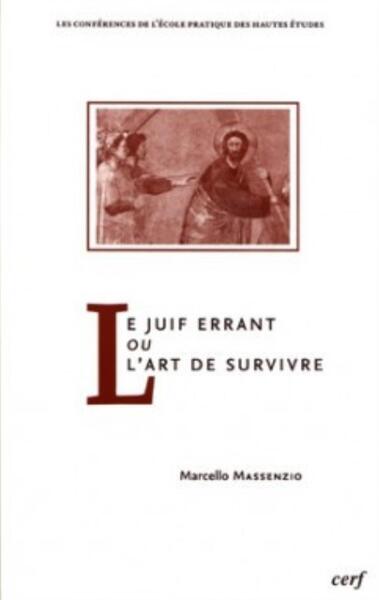
LE JUIF ERRANT OU L'ART DE SURVIVRE
Cerf - EAN : 9782204092364
Édition papier
EAN : 9782204092364
Paru le : 25 mars 2010
16,50 €
15,64 €
Epuisé
Arrêt définitif de commercialisation
Notre engagement qualité
-
 Livraison gratuite
en France sans minimum
de commande -
 Manquants maintenus
en commande
automatiquement -
 Un interlocuteur
unique pour toutes
vos commandes -
 Toutes les licences
numériques du marché
au tarif éditeur -
 Assistance téléphonique
personalisée sur le
numérique -
 Service client
Du Lundi au vendredi
de 9h à 18h
- EAN13 : 9782204092364
- Réf. fournisseur : 775643
- Editeur : Cerf
- Date Parution : 25 mars 2010
- Disponibilite : Epuisé
- Barème de remise : NS
- Nombre de pages : 141
- Format : H:192 mm L:124 mm E:15 mm
- Poids : 401gr
- Interdit de retour : Retour interdit
-
Résumé :
Marcello Massenzio propose ici une analyse fascinante de « figures » du Juif errant. Condamné à une errance perpétuelle pour avoir frappé Jésus dans la montée au Calvaire, le Juif errant devient un mythe ambigu dès le XIIIe siècle, porteur à la fois du thème du Juif témoin de la Passion et de motifs antijuifs. Une fresque de Giotto rend compte avec nuance de cette ambivalence, que mettent encore plus en évidence deux textes peu connus de Goethe. Au début du XXe siècle, le mythe est réapproprié par la culture juive, notamment dans une série de tableaux saisissants de Chagall. Après la Shoah, le juif errant est plus que jamais porteur du destin juif — trouvant peut-être son incarnation dans le personnage troublant et obsédant du maître d'Élie Wiesel et d'Emmanuel Lévinas, l'étrange Monsieur Chouchani...
--
Here, Marcello Massenzio offers a fascinating analysis of different ‘representations' of the Wandering Jew. Condemned to roam perpetually for having struck Jesus on the road to Calvary, the Wandering Jew became an ambiguous myth from the 13th century onwards, embodying both the theme of the Jew who witnessed Christ's Passion and anti-Jewish motifs. A fresco by Giotto gives a subtle account of this ambivalence, particularly highlighting two little-known texts by Goethe. At the beginning of the 20th century, the myth was reappropriated by Jewish culture, notably in a series of striking paintings by Chagall. Since the Holocaust, the Wandering Jew has more than ever symbolised Jewish destiny - finding perhaps its incarnation in the unsettling and obsessive character of Élie Wiesel and Emmanuel Lévinas's teacher, the strange Mr. Shushani...