Nous utilisons des cookies pour améliorer votre expérience. Pour nous conformer à la nouvelle directive sur la vie privée, nous devons demander votre consentement à l’utilisation de ces cookies. En savoir plus.

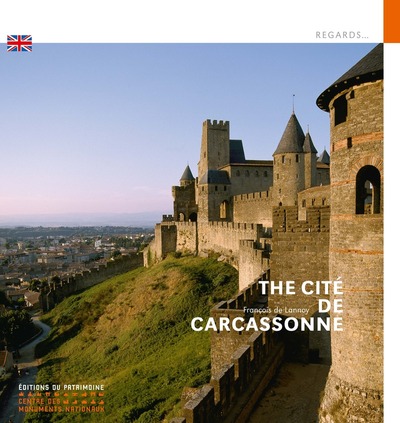
La Cité de Carcassonne (anglais)
Patrimoine - EAN : 9782757711668
Édition papier
EAN : 9782757711668
Paru le : 23 nov. 2026
14,00 €
13,27 €
Disponible
Pour connaître votre prix et commander, identifiez-vous
Notre engagement qualité
-
 Livraison gratuite
en France sans minimum
de commande -
 Manquants maintenus
en commande
automatiquement -
 Un interlocuteur
unique pour toutes
vos commandes -
 Toutes les licences
numériques du marché
au tarif éditeur -
 Assistance téléphonique
personalisée sur le
numérique -
 Service client
Du Lundi au vendredi
de 9h à 18h
- EAN13 : 9782757711668
- Réf. fournisseur : 1083131
- Collection : REGARDS
- Editeur : Patrimoine
- Date Parution : 23 nov. 2026
- Disponibilite : Disponible
- Barème de remise : NS
- Nombre de pages : 64
- Format : H:262 mm L:244 mm E:9 mm
- Poids : 420gr
-
Résumé :
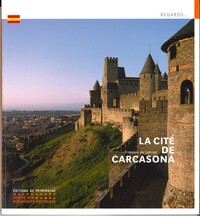
The Cité de Carcassonne forms the largest group of ancient and medieval urban fortifications preserved in Europe–;two enclosures of rampart walls demarcating an area of some 7 hectares and a chateau, boasting a total of 48 towers, 4 barbicans, and 2 bartizans. Set along the River Aude, at the intersection of two major routes linking the worlds of the Mediterranean and Aquitaine, the site of Carcassonne was inhabited from the 7th century BC; the Cité was fortified with ramparts in the late 3rd and early 4th centuries AD. Owned from the 11th century by the Trencavel family, governors of Lower Languedoc, it became one of the fortified towns emblematic of royal power at the end of the Albigensian Crusade in the 13th century. An outer enclosure was then erected and the inner rampart walls modernised. The Cité, a key element in the defence system set up in the face of the Kingdom of Aragon, stood as an impregnable fortress.
In 1659 the Treaty of the Pyrenees divested the Cité of any strategic role. Its defence system, in a neglected state, was to be saved from ruin in the 19th century through the combined efforts of Carcassonne's intelligentsia, the architect Viollet-le-Duc, and the department of Monuments Historiques. Today the exceptional character of this architectural ensemble has earned it a place among UNESCO's listed World Heritage Sites.