Nous utilisons des cookies pour améliorer votre expérience. Pour nous conformer à la nouvelle directive sur la vie privée, nous devons demander votre consentement à l’utilisation de ces cookies. En savoir plus.

L'HINDOUISME TRADITIONNEL ET L'INTERPRÉTATION D'ALAIN DANIÉLOU
Cerf - EAN : 9782204090933
Édition papier
EAN : 9782204090933
Paru le : 25 mai 2010
49,50 €
46,92 €
Epuisé
Pour connaître votre prix et commander, identifiez-vous
Manquant sans date
Notre engagement qualité
-
 Livraison gratuite
en France sans minimum
de commande -
 Manquants maintenus
en commande
automatiquement -
 Un interlocuteur
unique pour toutes
vos commandes -
 Toutes les licences
numériques du marché
au tarif éditeur -
 Assistance téléphonique
personalisée sur le
numérique -
 Service client
Du Lundi au vendredi
de 9h à 18h
- EAN13 : 9782204090933
- Réf. fournisseur : 775520
- Collection : HISTOIRE A VIF
- Editeur : Cerf
- Date Parution : 25 mai 2010
- Disponibilite : Manque sans date
- Barème de remise : NS
- Format : H:215 mm L:135 mm E:30 mm
- Poids : 648gr
- Interdit de retour : Retour interdit
-
Résumé :
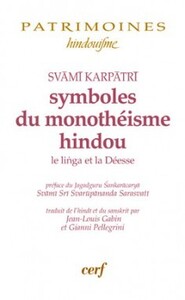
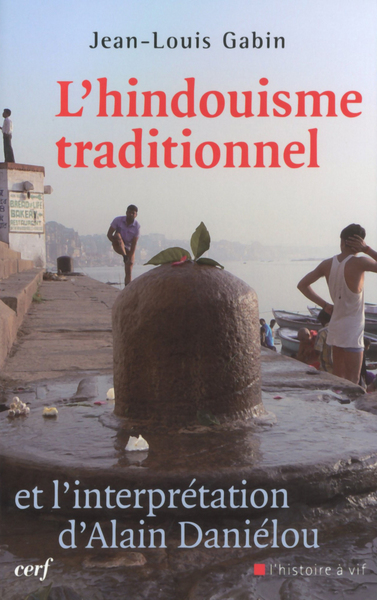
La troisième religion du monde est encore aujourd'hui mal connue. Dans les années 1960, Alain Daniélou s'est fait le porte-parole d'un hindouisme essentiellement polythéiste, du « linga » comme phallus et de Shiva comme dieu de l'extase. Mais ne se démarquait-il pas ainsi des enseignements de Swâmî Karpâtrî qu'il revendiquait comme maître ? Ne présentait-il pas à tort ce grand sage comme le fondateur d'un parti politique ultra nationaliste, le Jana Sangh ? Et comment comprendre la façon dont son livre célèbre « Shiva et Dionysos » détourne les écrits de René Guénon ? L'auteur de cet essai revisite l'héritage laissé par Alain Daniélou. Il s'appuie non seulement sur l'oeuvre de l'orientaliste mais aussi sur des traductions nouvelles, des documents inédits et des recherches approfondies auprès des représentants autorisés de la tradition hindoue. Avec précision et clarté, il raconte sa découverte de l'hindouisme traditionnel. Il met en rapport la spiritualité indienne et l'interprétation qu'en donne Daniélou, l'hindouisme orthodoxe et le fondamentalisme sanglant de l'« hindutva ». Il tente enfin de comprendre les implications à la fois religieuses et politiques — inaperçues depuis un demi-siècle — de la démarche d'Alain Daniélou : l'auteur du « Polythéisme hindou » n'a-t-il pas développé une vision personnelle de la religion, distanciée du christianisme de sa mère et de son frère, et de l'hindouisme orthodoxe par un cheminement dans un shivaïsme ésotérique cherchant à ranimer les cendres du paganisme gréco-romain ?
--
The world's third religion is still little-known today. As early as the 1960s, Alain Daniélou became the popular interpreter of an essentially polytheistic Hinduism of Linga as phallus, and Shiva as the god of ecstasy. But didn't this imply taking some distance from a man whose disciple he claimed to be, Swami Karpatri, whose texts he censured and whose thoughts he distorted? Didn't he present - wrongly - this wise man as the founder of an ultra-nationalist political party, the Jana Sangh? And how should we understand the manner in which his famous book, Shiva et Dionysos, exploits the writings of René Guénon? In this book, we discover that beneath an outer appearance of lightness, humour and anti-dogmatism, Alain Daniélou manipulated the work of two thinkers he claimed to present and make known. The author of this essay, who worked on and published Alain Daniélou's texts, inspects the heritage left to us. He bases his comments not only on the orientalist's writings but also on new translations, previously unpublished documents and his own meticulous research with official representatives of Hindu tradition. With precision and clarity, he recounts his discovery of traditional Hinduism, establishing the relation between spirituality and Daniélou's interpretation of it, orthodox Hinduism and the bloody fundamentalism of the ‘hindutva'. Lastly, he strives to understand the religious and political implications - which have gone unnoticed for half a century - of Alain Daniélou's approach: didn't the author of Polythéisme hindou develop, on the one hand, a personal vision of religion, taking his distance from the Christianity of his mother, the founder of the famous Ste. Marie schools, and of his cardinal brother? And on the other hand, from orthodox Hinduism, seeking his path within "esoteric Shaivism" in an attempt to rekindle the cinders of Greco-Roman paganism? In conclusion, the question is posed: wasn't Alain Daniélou's work hostile to all religion?