Nous utilisons des cookies pour améliorer votre expérience. Pour nous conformer à la nouvelle directive sur la vie privée, nous devons demander votre consentement à l’utilisation de ces cookies. En savoir plus.

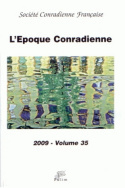
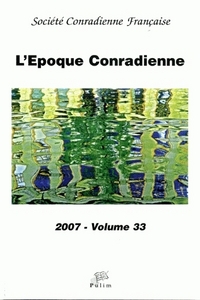
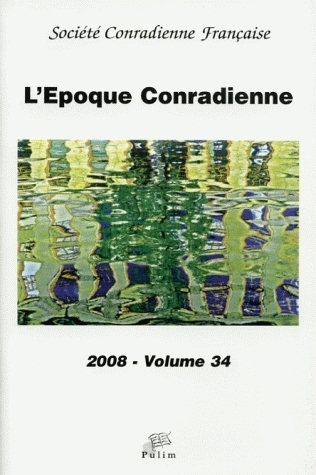
L'Époque Conradienne, volume 34/2008
Pu Limoges - EAN : 9782842874797
Édition papier
EAN : 9782842874797
Paru le : 30 mars 2009
12,00 €
11,37 €
Disponible
Pour connaître votre prix et commander, identifiez-vous
Notre engagement qualité
-
 Livraison gratuite
en France sans minimum
de commande -
 Manquants maintenus
en commande
automatiquement -
 Un interlocuteur
unique pour toutes
vos commandes -
 Toutes les licences
numériques du marché
au tarif éditeur -
 Assistance téléphonique
personalisée sur le
numérique -
 Service client
Du Lundi au vendredi
de 9h à 18h
- EAN13 : 9782842874797
- Réf. fournisseur : EP034-29
- Collection : EPOQUE
- Editeur : Pu Limoges
- Date Parution : 30 mars 2009
- Disponibilite : Disponible
- Barème de remise : NS
- Nombre de pages : 211
- Format : H:240 mm L:160 mm E:13 mm
- Poids : 367gr
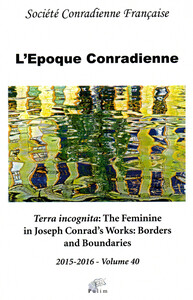
- Résumé : In this volume of L’Époque Conradienne are published most of the papers presented during the 2006 Limoges Conference entitled « Femininity, a privilege – not feminism, an attitude »*. The “feminine” in Joseph Conrad’s fictions: from ideology to a poetics of heterogeneity. Colleagues from France, Britain, Poland, Norway, South Africa and Canada offered new light on Conrad’s position on the question of the feminine – a question which took a new turn at the beginning of the 20th century, when Modernism modified the perception of gender divisions.A majority of articles deal with the question of clichés and stereotypes and the way Conrad allows the emergence of new representations of gendered identities and of a sexualized worldview – characteristics not often associated with Conrad’s fiction. Several also tackle the question of the relationship between patriarchy and imperialism: does his critical approach to imperialism address or obliterate the question of patriarchy? Finally, all tend to prove that there is definitely a place for feminist criticism and the question of feminine writing in Conradian studies – pointing out that our reading of Conrad’s fiction is modified if we scrutinize “femininity” (the “privilege”) with the tools of the “attitude”, “feminism”. Such approaches pave the way for a further exploration of that field.