Nous utilisons des cookies pour améliorer votre expérience. Pour nous conformer à la nouvelle directive sur la vie privée, nous devons demander votre consentement à l’utilisation de ces cookies. En savoir plus.

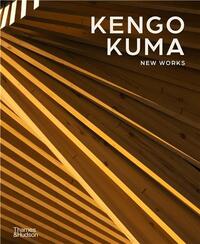
Kengo Kuma
Taschen - EAN : 9783754404621
Édition papier
EAN : 9783754404621
Paru le : 22 oct. 2026
25,00 €
23,70 €
Bientôt disponible
Pour connaître votre prix et commander, identifiez-vous
A paraître 22 oct. 2026
Notre engagement qualité
-
 Livraison gratuite
en France sans minimum
de commande -
 Manquants maintenus
en commande
automatiquement -
 Un interlocuteur
unique pour toutes
vos commandes -
 Toutes les licences
numériques du marché
au tarif éditeur -
 Assistance téléphonique
personalisée sur le
numérique -
 Service client
Du Lundi au vendredi
de 9h à 18h
- EAN13 : 9783754404621
- Réf. fournisseur : 42390
- Collection : 45TH EDITION
- Editeur : Taschen
- Date Parution : 22 oct. 2026
- Disponibilite : Pas encore paru
- Barème de remise : NS
- Nombre de pages : 512
- Format : H:217 mm L:156 mm
- Poids : 1.103kg
- Interdit de retour : Retour interdit
-
Résumé :
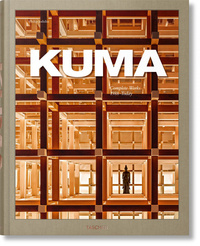
After Tadao Ando, Toyo Ito, and Fumihiko Maki, Kengo Kuma has breathed renewed vigor and lightness into Japanese architecture. Departing from the modernist skyscraper of the 20th century, Kuma traveled through his native Japan to develop a truly sustainable approach, translating local craftsmanship and resources into site-specific, timely buildings. Informed by tradition, and with both feet firmly planted in the present, this “materialist” heralds a new tactile architecture marked by its engaging surfaces, innovative structures, and fluid forms, reconnecting people with the physicality of a house. Kuma’s objective, above all else, is “just to respect the culture and environment of the place where I am working.”
To this end, Kuma shaped the China Academy of Art’s Folk Art Museum partially from discarded roof tiles; created a Chapel out of birch and moss in Nagano; and worked with local craftsmen to sculpt the V&A Dundee into a twisted, layered reflection of the Scottish coastal cliffs. With an extraordinary sensitivity for space, light, and texture, Kuma reveals unexpected qualities in materials, finding the weightlessness of stone in Chokkura Plaza and the softness of aluminum in the thatched roof of the Yangcheng Lake Tourist Transportation Center.
More recently, the architect brought his philosophy to the Japan National Stadium built for the Olympic Games, originally planned for 2020. Kuma has said the stadium could be “the catalyst that will transform Tokyo back from a concrete city. I want it to set an example that will help alter the direction of Japanese architectural design.”
In this monograph with some 500 illustrations spanning photographs, sketches, and plans, Kuma guides us through his entire career to date, detailing milestone projects as well as ongoing works. -
Biographie :
Philip Jodidio a étudié l’histoire de l’art et l’économie à Harvard, puis a été rédacteur en chef du Connaissance des Arts pendant plus de vingt ans. Chez TASCHEN, il a notamment signé la série Homes for Our Time et des monographies de nombreux architectes majeurs, dont Norman Foster, Tadao Ando, Renzo Piano, Jean Nouvel et Zaha Hadid.