Nous utilisons des cookies pour améliorer votre expérience. Pour nous conformer à la nouvelle directive sur la vie privée, nous devons demander votre consentement à l’utilisation de ces cookies. En savoir plus.

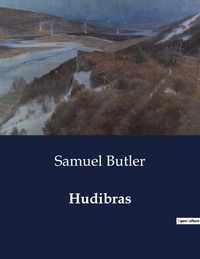
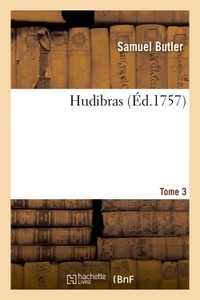
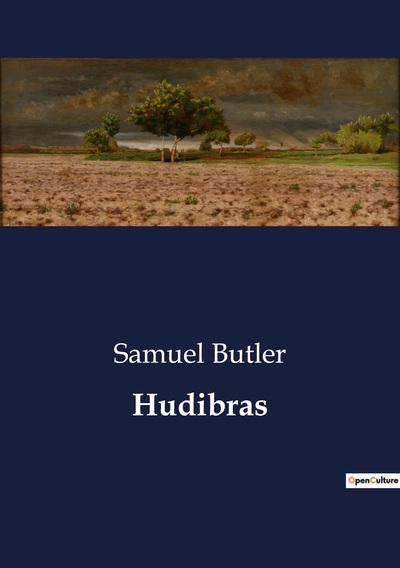
Hudibras
EAN : 9791041801855
Édition papier
EAN : 9791041801855
Paru le : 11 juil. 2023
27,90 €
26,45 €
Disponible
Pour connaître votre prix et commander, identifiez-vous
Notre engagement qualité
-
 Livraison gratuite
en France sans minimum
de commande -
 Manquants maintenus
en commande
automatiquement -
 Un interlocuteur
unique pour toutes
vos commandes -
 Toutes les licences
numériques du marché
au tarif éditeur -
 Assistance téléphonique
personalisée sur le
numérique -
 Service client
Du Lundi au vendredi
de 9h à 18h
- EAN13 : 9791041801855
- Réf. fournisseur : 300013
- Date Parution : 11 juil. 2023
- Disponibilite : Disponible
- Barème de remise : NS
- Nombre de pages : 446
- Format : H:210 mm L:148 mm E:24 mm
- Poids : 573gr
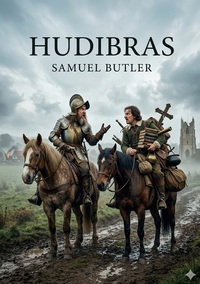
- Résumé : "Hudibras" by Samuel Butler is a satirical poem that critiques the religious and political turmoil of 17th-century England, particularly during the English Civil War. The poem is divided into three parts and follows the misadventures of Sir Hudibras, a self-proclaimed knight, and his squire, Ralpho. The narrative begins with a description of Sir Hudibras, highlighting his pretentiousness and lack of true understanding despite his supposed scholarly knowledge. Butler uses Hudibras as a vehicle to mock the Puritans and Presbyterians, portraying them as hypocritical and misguided in their religious zeal. The poem is rich in allusions to classical literature, philosophy, and contemporary events, showcasing Butler's erudition and wit. The first canto introduces Hudibras's character and his misguided sense of chivalry, as he sets out to quell a bear-baiting event, believing it to be his duty to maintain peace. The poem's humor lies in the absurdity of Hudibras's actions and the exaggerated depiction of his character, which serves as a critique of the self-righteousness and folly of those who claim moral superiority. Butler's use of rhymed couplets and clever wordplay adds to the satirical tone, making "Hudibras" a timeless commentary on the dangers of fanaticism and the absurdities of human nature.
- Biographie : Samuel Butler, a British writer born in 1835 and deceased in 1902, remains a major figure of Victorian literature, recognized for his critical spirit, humor, and intellectual daring. Coming from a well-to-do family, he quickly turned away from an ecclesiastical career to devote himself to writing, painting, and the exploration of new ideas. His work, often tinged with satire and philosophy, questions the foundations of society, religion, and progress. Butler is distinguished by a literary style that is both elegant and incisive, capable of deconstructing the dogmas of his time with biting irony. Erewhon and its sequel, Erewhon Revisited, testify to his fascination with utopian and dystopian societies, as well as his skepticism toward scientific and religious certainties. His original approach, blending travel narrative, social critique, and philosophical reflection, has influenced many authors of science fiction and satirical literature. Beyond his novels, Samuel Butler was interested in the theory of evolution, in the translation of Homer, and in painting, demonstrating an insatiable intellectual curiosity. His literary legacy endures today, both through the depth of his analyses and the modernity of his themes, making him a precursor of critical thought and an essential author for anyone interested in satire, utopian society, or modern philosophy.