Nous utilisons des cookies pour améliorer votre expérience. Pour nous conformer à la nouvelle directive sur la vie privée, nous devons demander votre consentement à l’utilisation de ces cookies. En savoir plus.

Hard Times
EAN : 9791043141324
Édition papier
EAN : 9791043141324
Paru le : 13 mars 2026
26,95 €
25,55 €
Disponible
Pour connaître votre prix et commander, identifiez-vous
Notre engagement qualité
-
 Livraison gratuite
en France sans minimum
de commande -
 Manquants maintenus
en commande
automatiquement -
 Un interlocuteur
unique pour toutes
vos commandes -
 Toutes les licences
numériques du marché
au tarif éditeur -
 Assistance téléphonique
personalisée sur le
numérique -
 Service client
Du Lundi au vendredi
de 9h à 18h
- EAN13 : 9791043141324
- Réf. fournisseur : 448286
- Date Parution : 13 mars 2026
- Disponibilite : Disponible
- Barème de remise : NS
- Nombre de pages : 378
- Format : H:210 mm L:148 mm E:20 mm
- Poids : 488gr
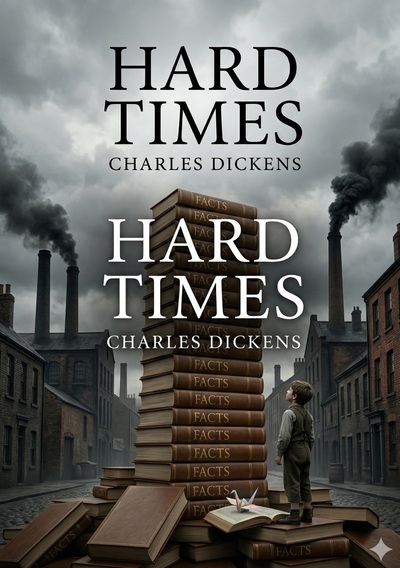
- Résumé : Hard Times (originally Hard Times—For These Times) was published in 1854, and is the shortest novel Charles Dickens ever published. It's set in Coketown, a fictional mill-town set in the north of England. One of the major themes of the book is the miserable treatment of workers in the mills, and the resistance to their unionization by the mill owners, typified by the character Josiah Bounderby, who absurdly asserts that the workers live a near-idyllic life but they all "expect to be set up in a coach and six, and to be fed on turtle soup and venison, with a gold spoon." The truth, of course, is far different.The other major topic which Dickens tackles in this novel is the rationalist movement in schooling and the denigration of imagination and fantasy. It begins with the words "Now, what I want is, Facts," spoken by the wealthy magnate Thomas Gradgrind, who is supervising a class at a model school he has opened. This indeed is Gradgrind's entire philosophy. "Teach these boys and girls nothing but Facts. Facts alone are wanted in life. Plant nothing else, and root out everything else." He is supported and encouraged in this approach by his friend Bounderby. Grandgrind raises his own children on these principles, and, as we discover, in doing so blights their lives.The novel also follows the story of a particular mill-worker, Stephen Blackpool, who leads a tragic life. He is burdened with an alcoholic, slatternly wife, who is mostly absent from his life, but who returns at irregular intervals to trouble him. This existing marriage, and the near-impossibility of divorce for someone of his class, prevents him marrying Rachael, who is the light of his life. Dickens depicts Stephen as representing the nobility of honest work, and contrasts his character with that of the self-satisfied humbug Josiah Bounderby who represents the worst aspects of capitalism.