Nous utilisons des cookies pour améliorer votre expérience. Pour nous conformer à la nouvelle directive sur la vie privée, nous devons demander votre consentement à l’utilisation de ces cookies. En savoir plus.

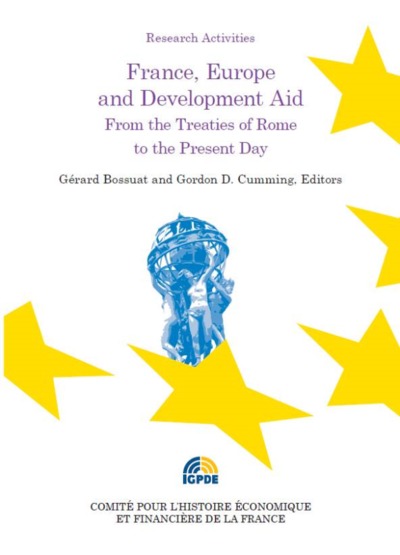
FRANCE, EUROPE AND DEVELOPMENT AID
Igpde - EAN : 9782111293786
Édition papier
EAN : 9782111293786
Paru le : 3 déc. 2013
28,00 €
26,54 €
Disponible
Pour connaître votre prix et commander, identifiez-vous
Notre engagement qualité
-
 Livraison gratuite
en France sans minimum
de commande -
 Manquants maintenus
en commande
automatiquement -
 Un interlocuteur
unique pour toutes
vos commandes -
 Toutes les licences
numériques du marché
au tarif éditeur -
 Assistance téléphonique
personalisée sur le
numérique -
 Service client
Du Lundi au vendredi
de 9h à 18h
- EAN13 : 9782111293786
- Réf. fournisseur : CH0099
- Collection : XIXE ET XXE SIE
- Editeur : Igpde
- Date Parution : 3 déc. 2013
- Disponibilite : Disponible
- Barème de remise : NS
- Nombre de pages : 250
- Format : H:220 mm L:160 mm E:13 mm
- Poids : 392gr
- Résumé : This book is based on the proceedings of a major conference on France, Europe and development aid, from the Treaties of Rome to the present day, organised by the French Development Agency (AFD) and the Institute of Public Management and Economic Development (IGPDE). It presents, in the form of a dialogue between academics and major players in this field (Philippe de Fontaine Vive, Dieter Frisch, Omar Kabbaj, Bernard Petit, Dov Zerah and Tertius Zongo), an overview of development cooperation from the point of view of three key players: the AFD together with the French government, the European Commission and the recipient countries. France's aid has, since 1945, clearly been driven by humanitarian, moral and political considerations as well as by the defence of French economic interests. It is one of the instruments of French influence in international relations. What is the role of French development assistance now that a new player, the European Commission, has been involved in this field since 1958? What sort of development policy do the Member States of the European Union and the Commission envisage? What role is there for France in the European dimension of assistance? Is there still room for official assistance within a liberalised economic area, in which private enterprise is paramount? The answers provided to these questions show that European societies do not view international relations simply in terms of economic confrontation or cold indifference.