Nous utilisons des cookies pour améliorer votre expérience. Pour nous conformer à la nouvelle directive sur la vie privée, nous devons demander votre consentement à l’utilisation de ces cookies. En savoir plus.

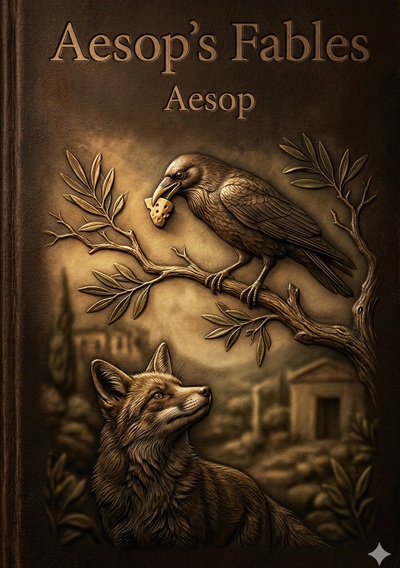
Fables
EAN : 9791043141034
Édition papier
EAN : 9791043141034
Paru le : 12 mars 2026
24,95 €
23,65 €
Disponible
Pour connaître votre prix et commander, identifiez-vous
Notre engagement qualité
-
 Livraison gratuite
en France sans minimum
de commande -
 Manquants maintenus
en commande
automatiquement -
 Un interlocuteur
unique pour toutes
vos commandes -
 Toutes les licences
numériques du marché
au tarif éditeur -
 Assistance téléphonique
personalisée sur le
numérique -
 Service client
Du Lundi au vendredi
de 9h à 18h
- EAN13 : 9791043141034
- Réf. fournisseur : 444074
- Date Parution : 12 mars 2026
- Disponibilite : Disponible
- Barème de remise : NS
- Nombre de pages : 310
- Format : H:210 mm L:148 mm E:17 mm
- Poids : 403gr
- Résumé : Whether it's the benefits of taking it slow and steady ("The Tortoise and the Hare"), the necessity of invention ("The Crow and the Pitcher"), or the problems of cognitive dissonance ("The Fox and the Grapes"), Aesop has a fable for every occasion. Aesop lived in Greece in the 6th century BCE, far enough in the past that it's become impossible to ascribe all these fables to him. Some were certainly retellings of older myths, some share their roots in collections of fables from India and further afield, and many were added well after his time. However, they all share a certain quality of prose that marks them out as belonging to the collection regardless of authorship. It's that quality, combined with their insight into the human character, that has meant that they've stood the test of time for twenty-five centuries.This collection is the 1912 translation by V. S. Vernon Jones, comprising two hundred and eighty-four of the fables.
- Biographie : Aesop (/ˈiːsɒp/ EE-sop; Ancient Greek: Αἴσωπος, Aísōpos; c. 620 - 564 BCE; formerly rendered as Æsop) was a Greek fabulist and storyteller credited with a number of fables now collectively known as Aesop's Fables. Although his existence remains unclear and no writings by him survive, numerous tales credited to him were gathered across the centuries and in many languages in a storytelling tradition that continues to this day. Many of the tales associated with him are characterized by anthropomorphic animal characters. Scattered details of Aesop's life can be found in ancient sources, including Aristotle, Herodotus, and Plutarch. An ancient literary work called The Aesop Romance tells an episodic, probably highly fictional version of his life, including the traditional description of him as a strikingly ugly slave (δοῦλος) who by his cleverness acquires freedom and becomes an adviser to kings and city-states. Older spellings of his name have included Esop(e) and Isope. Depictions of Aesop in popular culture over the last 2,500 years have included many works of art and his appearance as a character in numerous books, films, plays, and television programs.