Nous utilisons des cookies pour améliorer votre expérience. Pour nous conformer à la nouvelle directive sur la vie privée, nous devons demander votre consentement à l’utilisation de ces cookies. En savoir plus.

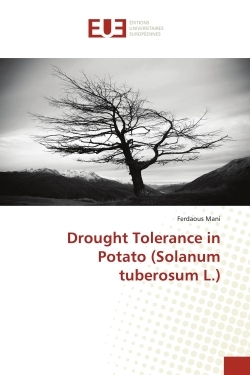
Drought Tolerance in Potato (Solanum tuberosum L.)
Univ Europeenne - EAN : 9783841746153
Édition papier
EAN : 9783841746153
Paru le : 22 janv. 2015
49,90 €
47,30 €
Disponible
Pour connaître votre prix et commander, identifiez-vous
Notre engagement qualité
-
 Livraison gratuite
en France sans minimum
de commande -
 Manquants maintenus
en commande
automatiquement -
 Un interlocuteur
unique pour toutes
vos commandes -
 Toutes les licences
numériques du marché
au tarif éditeur -
 Assistance téléphonique
personalisée sur le
numérique -
 Service client
Du Lundi au vendredi
de 9h à 18h
- EAN13 : 9783841746153
- Réf. fournisseur : 5972736
- Editeur : Univ Europeenne
- Date Parution : 22 janv. 2015
- Disponibilite : Disponible
- Barème de remise : NS
- Nombre de pages : 100
- Format : H:220 mm L:150 mm E:6 mm
- Poids : 160gr
- Interdit de retour : Retour interdit
- Résumé : To promote tolerance mechanisms without compromising tuber yield, study of limited irrigation techniques in potato is the most efficient definition of both the timing of water shortage initiation. This implicate a better study of the molecular and physiological mechanisms involved in tuberization and drought tolerance in different genotypes and environments. Another challenge is to define the yield components that are critically affected by water stress and the combination of traits that enhance drought tolerance without penalizing tuber yield. Genetic studies pointed that drought tolerance tend to be environment specific and dependent upon soil type, light intensity, and evaporative demands, among others. Consequently, it is recommanded to normalize the assessed trait values by the transpiration in potato in order to characterize the expected drought response with respect to the target environments.
- Biographie : Ferdaous Mani est un docteur en sciences agronomiques, diplômée de deux grands instituts: l'Institut Supérieur de Biotechnologie de Monastir et l'Institut Supérieur Agronomique de Chott Mariem, Sousse. Son parcours académique lui a permit de publier plusieurs articles scientifiques et deux livres.