Nous utilisons des cookies pour améliorer votre expérience. Pour nous conformer à la nouvelle directive sur la vie privée, nous devons demander votre consentement à l’utilisation de ces cookies. En savoir plus.

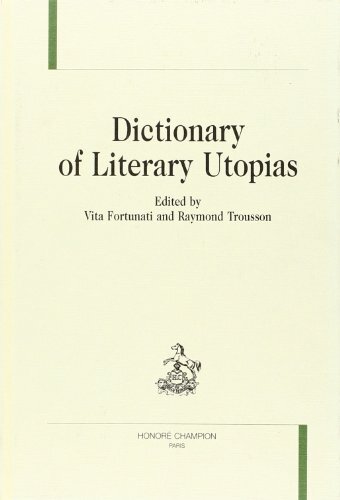
Dictionary of literary utopias
Champion - EAN : 9782745302182
Édition papier
EAN : 9782745302182
Paru le : 1 janv. 2000
155,00 €
146,92 €
Disponible
Pour connaître votre prix et commander, identifiez-vous
Notre engagement qualité
-
 Livraison gratuite
en France sans minimum
de commande -
 Manquants maintenus
en commande
automatiquement -
 Un interlocuteur
unique pour toutes
vos commandes -
 Toutes les licences
numériques du marché
au tarif éditeur -
 Assistance téléphonique
personalisée sur le
numérique -
 Service client
Du Lundi au vendredi
de 9h à 18h
- EAN13 : 9782745302182
- Réf. fournisseur : 07530218
- Collection : DR
- Editeur : Champion
- Date Parution : 1 janv. 2000
- Disponibilite : Disponible
- Barème de remise : NS
- Nombre de pages : 736
- Format : H:37 mm L:235 mm E:160 mm
- Poids : 1.175kg
- Résumé : For about thirty years, Utopia has been the subject of a vast number of studies, essays and congresses, but this is the first dictionary of literary utopias belonging to the Western literary tradition. Such an initiative has been promoted by the Centro Interdipartimentale di Ricerca sull’Utopia at the University of Bologna. Starting from the methodological hypothesis of utopia as a literary genre, the two editors Vita Fortunati and Raymond Trousson have covered a very broad chronological period from 1516, when the first edition of Thomas More’s Utopia appeared to 1989, a symbolic date marking the year in which the Berlin Wall fell. This challenging scientific enterprise is characterised by a comparative approach, since the utopian texts analysed belong to a variety of European and non-European nations. Furthermore, the 97 contributors come from wide range of linguistic and cultural backgrounds, from France, Belgium, Holland, Germany, England, Spain, Italy, Portugal, Russia, the United States, Brazil, Canada and Australia. This wide range of utopian traditions enables the reader to understand the particularities of utopian paradigm in each nation, precisely because each utopian tradition has developed characteristics which lead back to its own cultural identity and history. The scholars who have contributed to the dictionary have found it important to rethink the meaning and the value of utopia and its future as a literary form in the twenty-first century.