Nous utilisons des cookies pour améliorer votre expérience. Pour nous conformer à la nouvelle directive sur la vie privée, nous devons demander votre consentement à l’utilisation de ces cookies. En savoir plus.

Dialogues
EAN : 9791043140853
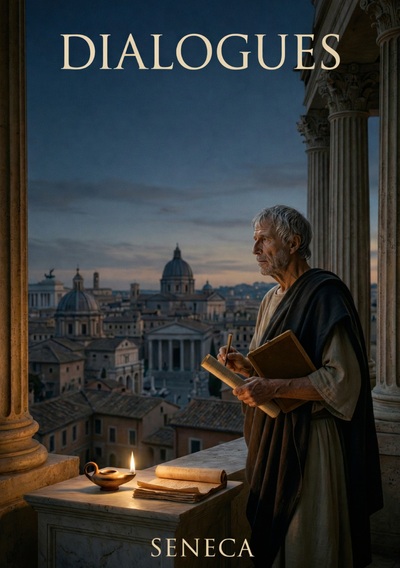
Édition papier
EAN : 9791043140853
Paru le : 11 mars 2026
34,95 €
33,13 €
Disponible
Pour connaître votre prix et commander, identifiez-vous
Notre engagement qualité
-
 Livraison gratuite
en France sans minimum
de commande -
 Manquants maintenus
en commande
automatiquement -
 Un interlocuteur
unique pour toutes
vos commandes -
 Toutes les licences
numériques du marché
au tarif éditeur -
 Assistance téléphonique
personalisée sur le
numérique -
 Service client
Du Lundi au vendredi
de 9h à 18h
- EAN13 : 9791043140853
- Réf. fournisseur : 444267
- Date Parution : 11 mars 2026
- Disponibilite : Disponible
- Barème de remise : NS
- Nombre de pages : 746
- Format : H:210 mm L:148 mm E:40 mm
- Poids : 947gr
- Résumé : Seneca the Younger was a statesman and philosopher who lived in Rome around the dawn of the Common Era. Though he wrote a large amount of tragedies and other works, today he's perhaps best known for his writing on Stoic philosophy and principles.Seneca didn't write books about Stoicism; rather, he composed essays and sent letters over the course of his lifetime that addressed that philosophy. Since these essays and letters are addressed to his friends and contemporaries, they're written in a conversational style, and thus referred to as his "Dialogues." Some were written to friends on the death of their loved ones, in an effort to console and comfort them. Others were written to help friends with their personality flaws, like anger. One, "On Clemency," was addressed to the emperor Nero as an effort to guide him on the path of good statesmanship.This collection contains all of his dialogues, including the longer "On Benefits."
- Biographie : Lucius Annaeus Seneca the Younger (/ˈsɛnɪkə/ SEN-ik-ə; c. 4 BC - AD 65),[1] usually known mononymously as Seneca, was a Stoic philosopher of Ancient Rome, a statesman, a dramatist, and in one work, a satirist, from the post-Augustan age of Latin literature. Seneca was born in Colonia Patricia Corduba in Hispania, and was trained in rhetoric and philosophy in Rome. His father was Seneca the Elder, his elder brother was Lucius Junius Gallio Annaeanus, and his nephew was the poet Lucan. In AD 41, Seneca was exiled to the island of Corsica under emperor Claudius,[2] but was allowed to return in 49 to become a tutor to Nero. When Nero became emperor in 54, Seneca became his advisor and, together with the praetorian prefect Sextus Afranius Burrus, provided competent government for the first five years of Nero's reign. Seneca's influence over Nero declined with time, and in 65 Seneca was executed by forced suicide for alleged complicity in the Pisonian conspiracy to assassinate Nero, of which he may have been innocent, although there is still no consensus agreement.[3] His stoic and calm suicide has become the subject of numerous paintings. As a writer, Seneca is known for his philosophical works, and for his plays, which are all tragedies. His prose works include 12 essays and 124 letters dealing with moral issues. These writings constitute one of the most important bodies of primary material for ancient Stoicism.[4] As a tragedian, he is best known for plays such as his Medea, Thyestes, and Phaedra. Seneca had an immense influence on later generations—during the Renaissance he was "a sage admired and venerated as an oracle of moral, even of Christian edification; a master of literary style and a model [for] dramatic art."