Nous utilisons des cookies pour améliorer votre expérience. Pour nous conformer à la nouvelle directive sur la vie privée, nous devons demander votre consentement à l’utilisation de ces cookies. En savoir plus.

Candida
EAN : 9791041995158
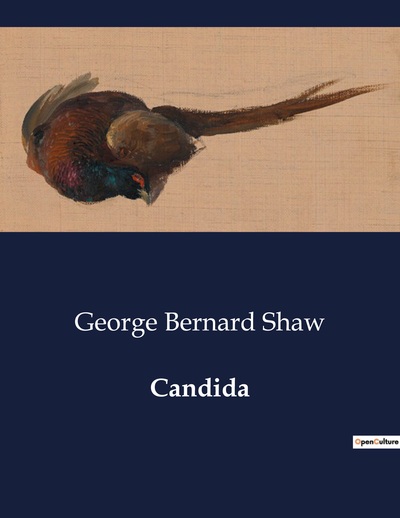
Édition papier
EAN : 9791041995158
Paru le : 31 mars 2024
15,00 €
14,22 €
Disponible
Pour connaître votre prix et commander, identifiez-vous
Notre engagement qualité
-
 Livraison gratuite
en France sans minimum
de commande -
 Manquants maintenus
en commande
automatiquement -
 Un interlocuteur
unique pour toutes
vos commandes -
 Toutes les licences
numériques du marché
au tarif éditeur -
 Assistance téléphonique
personalisée sur le
numérique -
 Service client
Du Lundi au vendredi
de 9h à 18h
- EAN13 : 9791041995158
- Réf. fournisseur : 341584
- Date Parution : 31 mars 2024
- Disponibilite : Disponible
- Barème de remise : NS
- Nombre de pages : 60
- Format : H:220 mm L:170 mm E:4 mm
- Poids : 110gr
- Résumé : "Candida" by George Bernard Shaw is a play set in the late 19th century, exploring themes of love, marriage, and social ideals. The narrative unfolds in the parsonage of Reverend James Mavor Morell, a Christian Socialist clergyman, who is devoted to his work and his wife, Candida. The play begins with Morell's busy morning routine, highlighting his popularity and commitment to various social causes. The arrival of Eugene Marchbanks, a young poet, introduces a tension that challenges the stability of Morell's seemingly perfect marriage. Marchbanks, who is sensitive and introspective, confesses his love for Candida, believing that she is trapped in a life of mundane domesticity with Morell. This confession sets the stage for a confrontation between the two men, each representing different ideals and approaches to life. Morell, confident in his marriage and his role as a clergyman, initially dismisses Marchbanks' feelings as youthful infatuation. However, as the play progresses, the sincerity and intensity of Marchbanks' emotions force Morell to reevaluate his relationship with Candida. The play culminates in a dramatic scene where Candida is asked to choose between her husband and the young poet. Her decision reveals Shaw's critique of conventional marriage and the societal expectations placed on women. Through witty dialogue and complex character interactions, Shaw examines the nature of love, the constraints of social roles, and the quest for personal fulfillment. "Candida" ultimately challenges the audience to reconsider the true meaning of love and the sacrifices it demands.