Nous utilisons des cookies pour améliorer votre expérience. Pour nous conformer à la nouvelle directive sur la vie privée, nous devons demander votre consentement à l’utilisation de ces cookies. En savoir plus.

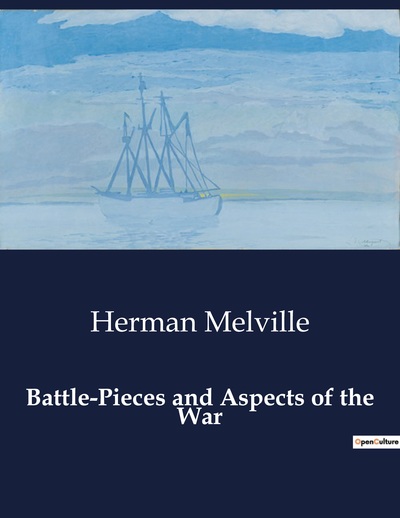
Battle-Pieces and Aspects of the War
EAN : 9791041987719
Édition papier
EAN : 9791041987719
Paru le : 3 mars 2024
22,00 €
20,85 €
Disponible
Pour connaître votre prix et commander, identifiez-vous
Notre engagement qualité
-
 Livraison gratuite
en France sans minimum
de commande -
 Manquants maintenus
en commande
automatiquement -
 Un interlocuteur
unique pour toutes
vos commandes -
 Toutes les licences
numériques du marché
au tarif éditeur -
 Assistance téléphonique
personalisée sur le
numérique -
 Service client
Du Lundi au vendredi
de 9h à 18h
- EAN13 : 9791041987719
- Réf. fournisseur : 336516
- Date Parution : 3 mars 2024
- Disponibilite : Disponible
- Barème de remise : NS
- Nombre de pages : 168
- Format : H:220 mm L:170 mm E:9 mm
- Poids : 272gr
- Résumé : "Battle-Pieces and Aspects of the War" by Herman Melville is a collection of poems that reflect on the American Civil War, capturing the emotional and historical essence of the conflict. Published in 1866, the work is dedicated to the memory of the 300,000 soldiers who died fighting for the Union. The poems were inspired by various events and battles, including the fall of Richmond, and they explore themes of heroism, sacrifice, and the moral complexities of war. Melville's verses are not arranged chronologically but rather thematically, offering a mosaic of perspectives on the war's impact on individuals and the nation. The collection opens with "The Portent," a poem about John Brown's execution, setting a somber tone for the pieces that follow. Melville's work includes reflections on significant battles such as Shiloh, Antietam, and Gettysburg, as well as naval clashes like the fight between the Monitor and the Merrimac. Through vivid imagery and poignant language, Melville conveys the chaos and tragedy of war, while also acknowledging the bravery and resilience of those who fought. Melville's poetry is marked by a deep sense of empathy and a recognition of the shared humanity of both Union and Confederate soldiers. He grapples with the moral ambiguities of the conflict, questioning the righteousness of the cause and the cost of victory. The collection concludes with a meditation on the war's aftermath and the hope for reconciliation and healing.
- Biographie : Né à Manhattan en 1819, Herman Melville prend la mer à 20 ans. Ses aventures autour du globe fourniront la matière, entre autres, du célèbrissime Moby Dick. Revenu à terre, il mène une vie stable et familiale à partir de 1847, dans le Massachusetts, puis à New York. La nouvelle Bartleby date de 1853. Mort dans l'oubli à 72 ans, après des années douloureuses sur le plan personnel, Melville sera redécouvert dans les années 1920. Son oeuvre complexe et ambitieuse est aujourd'hui étudiée et traduite dans le monde entier.