Nous utilisons des cookies pour améliorer votre expérience. Pour nous conformer à la nouvelle directive sur la vie privée, nous devons demander votre consentement à l’utilisation de ces cookies. En savoir plus.

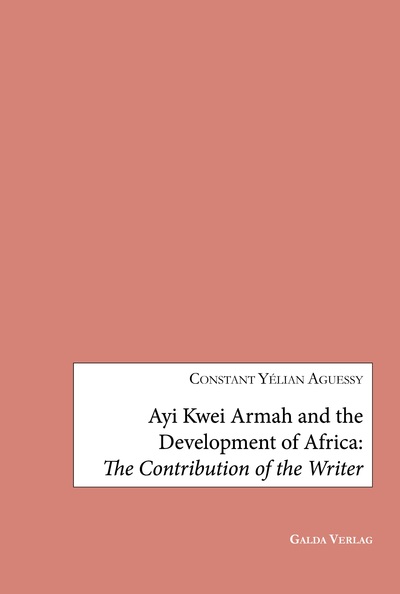
Ayi Kwei Armah and the Development of Africa
EAN : 9783962034382
Édition papier
EAN : 9783962034382
Paru le : 30 août 2026
62,00 €
58,77 €
Disponible
Pour connaître votre prix et commander, identifiez-vous
Notre engagement qualité
-
 Livraison gratuite
en France sans minimum
de commande -
 Manquants maintenus
en commande
automatiquement -
 Un interlocuteur
unique pour toutes
vos commandes -
 Toutes les licences
numériques du marché
au tarif éditeur -
 Assistance téléphonique
personalisée sur le
numérique -
 Service client
Du Lundi au vendredi
de 9h à 18h
- EAN13 : 9783962034382
- Réf. fournisseur : 466317
- Date Parution : 30 août 2026
- Disponibilite : Disponible
- Barème de remise : NS
- Nombre de pages : 244
- Format : H:230 mm L:155 mm E:15 mm
- Poids : 412gr
- Résumé : Drawing on Ayi Kwei Armah's major novels — among them Two Thousand Seasons, Osiris Rising, and KMT: In the House of Life — this study examines the historical and structural obstacles that have hindered African development since independence, from feudal and colonial legacies to neo-colonial exploitation, corruption, and cultural alienation. It further explores Armah's own literary contribution to imagining the continent's reconstruction, from his concept of the "Sphere" as a model of shared knowledge to his founding of the Per Ankh Publishing House. Originally presented as a doctoral dissertation at the Université d'Abomey-Calavi (Benin), the book offers literary scholars, Africanists, and students of postcolonial theory a framework for understanding African fiction as a vehicle for continental renewal.
- Biographie : Dr. Constant Yélian Aguessy is Maître de Conférences (CAMES-accredited Associate Professor) at the Université de Parakou, Benin. He holds a Ph.D. in English Literature from the Université d'Abomey-Calavi, where his research focused on African literature and the works of Ayi Kwei Armah. He has since published widely on African and postcolonial literature in regional and international academic journals.