Nous utilisons des cookies pour améliorer votre expérience. Pour nous conformer à la nouvelle directive sur la vie privée, nous devons demander votre consentement à l’utilisation de ces cookies. En savoir plus.

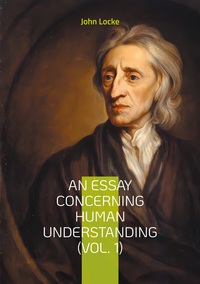
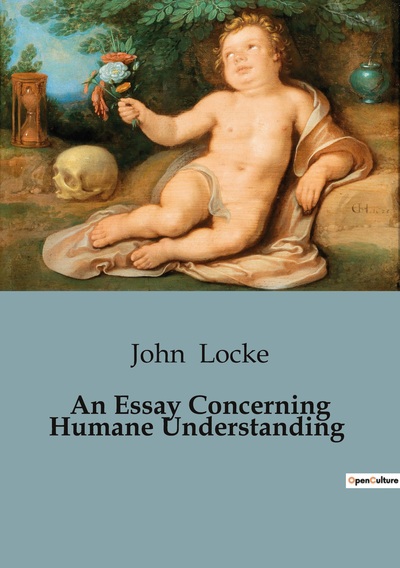
An Essay Concerning Humane Understanding
EAN : 9791041947966
Édition papier
EAN : 9791041947966
Paru le : 25 mars 2023
41,00 €
38,86 €
Disponible
Pour connaître votre prix et commander, identifiez-vous
Notre engagement qualité
-
 Livraison gratuite
en France sans minimum
de commande -
 Manquants maintenus
en commande
automatiquement -
 Un interlocuteur
unique pour toutes
vos commandes -
 Toutes les licences
numériques du marché
au tarif éditeur -
 Assistance téléphonique
personalisée sur le
numérique -
 Service client
Du Lundi au vendredi
de 9h à 18h
- EAN13 : 9791041947966
- Réf. fournisseur : 273248
- Date Parution : 25 mars 2023
- Disponibilite : Disponible
- Barème de remise : NS
- Nombre de pages : 876
- Format : H:210 mm L:148 mm E:47 mm
- Poids : 1.109kg
- Résumé : "An Essay Concerning Humane Understanding" by John Locke is a seminal work that delves into the nature and limits of human knowledge. Locke challenges the notion of innate ideas, arguing instead that the mind is a tabula rasa, or blank slate, at birth. He posits that all knowledge is derived from experience, which is processed through the senses and reflection. The essay is structured into four books, each addressing different aspects of human understanding. The first book refutes the existence of innate principles, suggesting that universal consent does not imply innateness. The second book explores the origin of ideas, distinguishing between simple and complex ideas, and discusses the processes of perception, retention, and discernment. The third book examines language, emphasizing the importance of clear and determined ideas to avoid confusion and miscommunication. The final book investigates the nature and extent of human knowledge, including the degrees of assent and the limitations of human comprehension. Locke's work is foundational in the field of epistemology, influencing subsequent philosophical thought by advocating for empirical evidence as the basis of knowledge.
- Biographie : John Locke, born on August 29, 1632, in Wrington, England, is a towering figure in the history of Western philosophy. Known as the "Father of Liberalism," Locke's contributions to political theory, epistemology, and education have left an indelible mark on modern thought. Educated at Christ Church, Oxford, Locke initially pursued a career in medicine, but his interests soon turned to philosophy and politics. His seminal work, An Essay Concerning Human Understanding, published in 1689, revolutionized the concept of knowledge by advocating empiricism and rejecting innate ideas. Locke's philosophy of mind, centered on the idea of the mind as a "tabula rasa," laid the foundation for modern psychology and cognitive science. His political writings, particularly Two Treatises of Government, championed the principles of natural rights and government by consent, influencing the development of democratic societies. Locke's ideas were pivotal during the Enlightenment, shaping the thoughts of later philosophers such as Voltaire and Rousseau. John Locke passed away on October 28, 1704, in High Laver, Essex, leaving a legacy that continues to resonate in the fields of Philosophy, Political Theory, and Enlightenment Studies.