Nous utilisons des cookies pour améliorer votre expérience. Pour nous conformer à la nouvelle directive sur la vie privée, nous devons demander votre consentement à l’utilisation de ces cookies. En savoir plus.

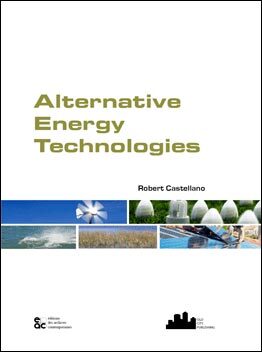
Alternative Energy Technologies
Archives Contemporaines - EAN : 9782813000767
Édition papier
EAN : 9782813000767
Paru le : 16 mars 2017
34,00 €
32,23 €
Disponible
Pour connaître votre prix et commander, identifiez-vous
Notre engagement qualité
-
 Livraison gratuite
en France sans minimum
de commande -
 Manquants maintenus
en commande
automatiquement -
 Un interlocuteur
unique pour toutes
vos commandes -
 Toutes les licences
numériques du marché
au tarif éditeur -
 Assistance téléphonique
personalisée sur le
numérique -
 Service client
Du Lundi au vendredi
de 9h à 18h
- EAN13 : 9782813000767
- Editeur : Archives Contemporaines
- Date Parution : 16 mars 2017
- Disponibilite : Disponible
- Barème de remise : NS
- Nombre de pages : 153
- Format : H:170 mm L:240 mm E:8 mm
- Poids : 366gr
-
Résumé :
Everyday, the world produces carbon dioxide that is released into the Earth’s atmosphere. This increase in carbon dioxide content is responsible for a rise in the temperature of our planet and contributes to what is known as «Global Warming». One answer to global warming is to replace and retrofit current technologies with alternative technologies, which are of comparable or greater efficiency but do not release carbon dioxide. We call this Alternate energy.
Climate change, population growth and fossil fuel depletion imply that renewables will need to play a bigger role in the future than they do today. According to British Petroleum and Royal Dutch Shell, two of the world’s largest oil companies, one-third of the world’s energy will need to come from solar, wind, and other renewable resources by 2 5 .
Alternative energy refers to energy sources that have no undesirable consequences such as those caused by fossil fuels or nuclear energy. Alternative energy sources are renewable and are thought to be «free» energy sources. Compared to conventional energy sources, they all release less carbon. They include solar energy, wind energy, geothermal energy, fuel cell batteries and nuclear energy.
This book provides a comprehensive overview of the main types of renewable energy. In addition, the text explains the underlying physical and technological principles of renewable energy and examines the environmental impact and future prospects of different energy sources. It includes over 35 detailed illustrations, more than fifty tables of data, and a wide range of case studies.